
Plants
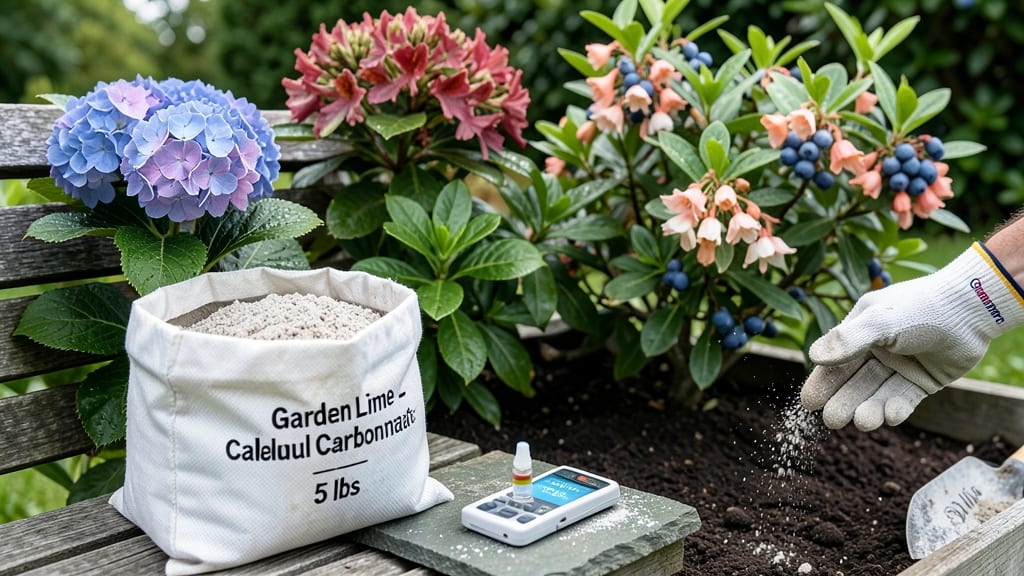
Garden plants that need lime to thrive include azaleas, hydrangeas, blueberries, and rhododendrons, which prefer acidic soil with a pH between 4.5 and 6.0. Lime helps raise soil pH to prevent nutrient deficiencies like iron chlorosis, especially in alkaline conditions. Always test your soil before applying lime to avoid overcorrecting the pH levels.
Many gardeners overlook how soil pH affects plant health, but lime is essential for acid-loving plants that struggle in alkaline conditions. 🌿 For example, blueberries won't produce berries if the soil pH climbs above 5.5, while azaleas show yellowing leaves when iron becomes unavailable.
The key is balancing pH—too much lime can make the soil too alkaline, harming these same plants. I recommend testing soil every 2-3 years, especially if you notice stunted growth or leaf discoloration.
Lime works by neutralizing acidic soil through calcium carbonate, which reacts with hydrogen ions to raise pH. This process also helps release phosphorus and other nutrients that become locked in acidic conditions. Dolomitic lime adds magnesium, while agricultural lime focuses on calcium—choose based on your soil test results.
Always apply in early spring or fall when plants aren't actively growing to minimize stress.
💡 In This Article
- How Lime Affects Soil pH for Acid-Loving Plants
- Best Lime Types and Application Methods for Garden Plants
How lime affects soil pH for acid-loving plants
Lime—typically made from calcium carbonate or dolomitic limestone—works by chemically neutralizing soil acidity through a process called neutralization. When lime dissolves in soil moisture, it releases calcium and magnesium ions that react with hydrogen ions (H⁺), reducing acidity.
This reaction shifts the soil's pH upward, making nutrients like phosphorus and nitrogen more available to plants. For example, azaleas and rhododendrons need pH levels between 4.5 and 5.5—any higher, and iron becomes locked in the soil, causing yellowing leaves (iron chlorosis). 🌱
The magic happens at the molecular level: calcium carbonate (CaCO₃) breaks down into calcium (Ca²⁺) and carbonate (CO₃²⁻) ions, which then react with acidic hydrogen ions (H⁺) to form water (H₂O) and carbon dioxide (CO₂).
This process not only raises pH but also improves soil structure by flocculating clay particles, enhancing drainage. However, the effect isn't instant—it can take 2-6 months for lime to fully integrate into the soil, depending on organic matter content and rainfall.
What most gardeners don't realize is that lime doesn't just raise pH—it also influences nutrient availability in complex ways. In highly acidic soil (pH < 5.0), aluminum and manganese become toxic to plants, while phosphorus binds tightly to soil particles, making it inaccessible. Lime application reduces these toxic metals and releases phosphorus, creating a balanced environment. For instance, blueberries require pH 4.5-5.5 to thrive, but adding too much lime can push the pH into alkaline territory (above 6.0), where boron and molybdenum deficiencies emerge.
Seasonal timing matters too. Applying lime in early spring gives it time to integrate before the growing season, while fall applications allow it to work through winter rains. Over-liming is a common mistake—once you raise pH above a plant's ideal range, you'll need sulfur to lower it again.
That's why soil testing is critical: a simple $20 home test kit or lab analysis can tell you exactly how much lime to add, measured in pounds per 100 square feet.
Consider this: hydrangeas change color based on soil pH! Blue hydrangeas love pH 5.5-6.0, while pink varieties prefer pH 6.0-7.0. Adding lime to blue hydrangeas can turn their blooms pink overnight—a dramatic visual demonstration of how pH affects plant chemistry.
The key is precision: aim for the lower end of your plant's ideal range and monitor growth closely after application.
For container gardens, lime works differently. Since pots drain quickly, you'll need to reapply lime more frequently—every 6-12 months—and use a water-soluble form.
The science is the same, but the scale is smaller: a 1-gallon container might need just 1/2 teaspoon of lime to adjust pH, while a 5-gallon pot requires 1-2 teaspoons. Always mix lime thoroughly into the top 6 inches of soil for even distribution.