
Plants
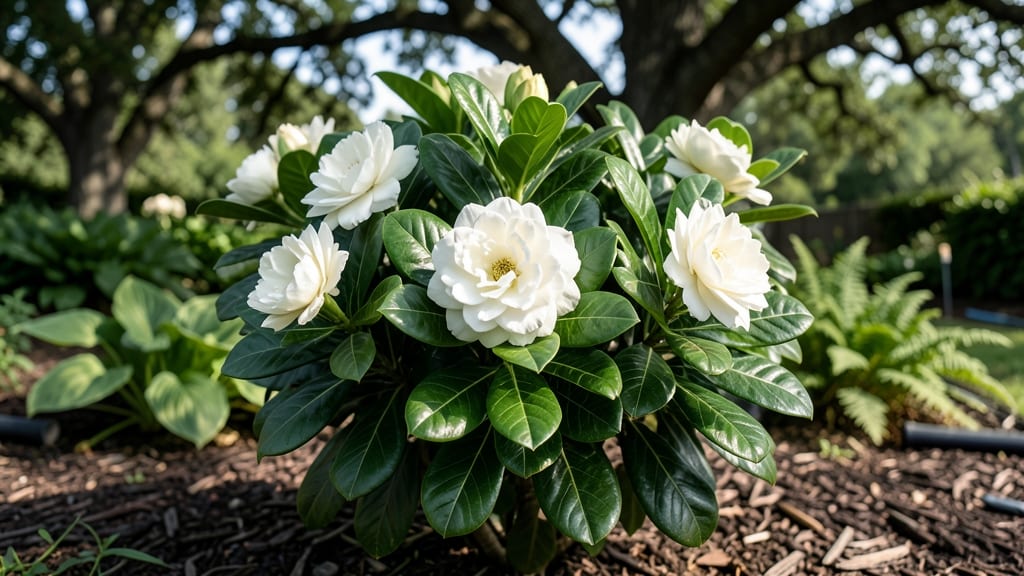
A gardenia plant looks like a tropical beauty with glossy dark green oval leaves and creamy-white, heavily perfumed flowers featuring thick, waxy petals. Its growth varies from bushy shrubs to sprawling vines, showcasing smooth stems and lush foliage.
A gardenia's most striking feature is its intoxicatingly fragrant blooms, which often grow in clusters and can reach up to 3 inches wide. 🌸 The leaves, typically 2-4 inches long, grow in opposite pairs along the stems, creating a dense, vibrant canopy.
What sets gardenias apart from similar plants is their unique scent—often described as sweet, rich, and slightly floral—paired with their thick, leathery petals that resist wilting longer than many other flowers.
These plants thrive in warm climates and prefer partial shade, which helps maintain their glossy foliage and encourages abundant blooming. Whether you're growing a compact gardenia shrub or a trailing variety, their lush appearance makes them a favorite for both gardens and indoor decor.
The contrast between their velvety petals and deep green leaves creates a visually stunning tropical vibe.
💡 In This Article
- Identifying Gardenia Flowers and Leaves
- Gardenia Plant Growth Patterns and Care Tips
Identifying gardenia flowers and leaves
The gardenia flower is a masterpiece of tropical elegance, featuring 6 thick, waxy petals that range from creamy-white to pale yellow. Each petal has a slightly ruffled edge and a velvety texture that feels almost like silk when touched.
At the center, you'll find a dense cluster of yellow stamens surrounded by a ring of white pistils, creating a striking contrast. The blooms often grow in clusters of 1-3 flowers per stem, with each flower reaching 2-3 inches wide when fully open. 🌸
What truly sets gardenia flowers apart is their intoxicating fragrance, which botanists describe as a complex blend of jasmine, tuberose, and vanilla notes with underlying citrusy undertones. This scent is strongest in the evening, making gardenias a favorite for nighttime garden strolls.
The flowers' waxy coating also gives them remarkable longevity—cut gardenias can last 7-10 days in a vase, longer than many other cut flowers. In comparison, jasmine flowers have thinner petals and a more delicate, star-shaped structure, while garden roses feature more pronounced petal layers and a different scent profile.
The leaves are equally distinctive, with their dark green, oval shape measuring 2-4 inches long and 1-2 inches wide. They grow in opposite pairs along the stems, creating a dense, symmetrical canopy.
The leaf surface is glossy and slightly leathery, with a prominent central vein and 5-7 secondary veins that create a subtle network pattern. When crushed, the leaves release a faint citrusy aroma, adding to the plant's tropical charm.
Unlike gardenia flowers, the leaves remain vibrant year-round in warm climates, providing a lush green backdrop for the seasonal blooms.
The stems are another identifying feature, typically 1/4 to 1/2 inch thick and covered in a smooth, slightly waxy bark. Young stems are a vibrant green, while mature stems develop a grayish-brown hue. This smooth texture helps distinguish gardenias from plants like hibiscus, which often have hairier stems.
The combination of these features—thick petals, dense foliage, and smooth stems—creates a cohesive tropical appearance that's instantly recognizable to garden enthusiasts. 🌿
One fascinating botanical detail is how gardenia flowers change color as they age. New buds appear greenish-white, gradually opening to reveal their creamy centers. Over 3-5 days, the petals may develop faint yellow or pink tinges at the edges, especially in cooler temperatures.
This color evolution adds to the plant's visual appeal and makes each bloom a dynamic display. The scent also intensifies as the flower matures, peaking on the second or third day before gradually fading.
To help with identification, here are key distinguishing features compared to similar plants:
- Gardenia vs. Jasmine: Gardenia petals are thicker and waxier, while jasmine petals are thinner and more delicate with a star-like shape
- Gardenia vs. Garden Roses: Gardenia flowers have fewer petals (typically 6) and a more tubular center, while roses have more petals and a more open bloom structure
- Gardenia vs. Hibiscus: Gardenia flowers are smaller and more clustered, while hibiscus flowers are larger with a single prominent bloom and different petal textures