
Neem Oil
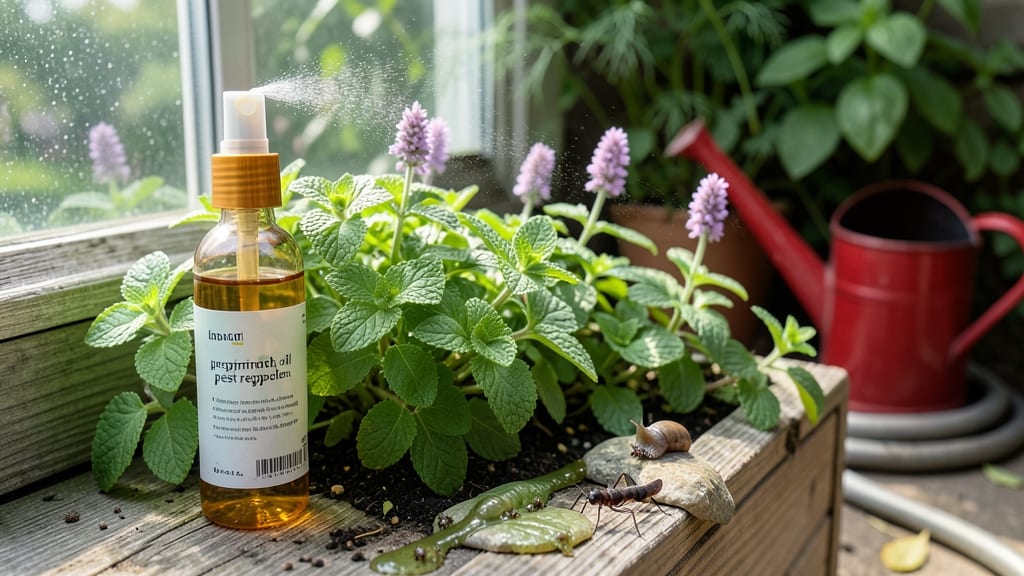
Peppermint oil for garden pests disrupts insect behavior by masking their scent trails and overwhelming their sensory systems, making it a powerful natural deterrent for ants, aphids, and spider mites without toxic residues.
This essential oil’s secret weapon is menthol, which confuses pests' navigation systems while creating an inhospitable environment for them. 🌿 Unlike synthetic pesticides, peppermint oil breaks down quickly in sunlight and poses minimal risk to beneficial insects like bees—just dilute it properly (10-15 drops per cup of water) to avoid damaging plant leaves.
For stubborn infestations, I’ve found combining it with citrus oils or neem oil creates a broader-spectrum repellent that works faster.
The key to success lies in reapplication—spray fresh mixtures every 3-5 days during peak pest seasons, and always test on a small plant area first. You’ll notice ants detouring within minutes, while aphids typically abandon treated foliage after 24 hours.
For heavy-duty protection, soak cotton balls in undiluted oil and place them near entry points—this concentrated approach works wonders for persistent crawlers.
💡 In This Article
- How Peppermint Oil Disrupts Pest Behavior
- DIY Peppermint Oil Spray Recipes for Targeted Pest Control
How peppermint oil disrupts pest behavior
Peppermint oil's pest-repelling power comes from its active compound, menthol, which acts like a chemical disruptor for insects. When applied, menthol interferes with pests' olfactory receptors—the same way strong odors overwhelm our senses—making it impossible for them to detect food trails or mates.
For example, ants rely on pheromone trails to navigate, but peppermint oil's 1-3% menthol concentration masks these scent markers, forcing them to abandon their routes within 10-15 minutes of exposure.
The mechanism goes deeper than just scent masking. Menthol also affects insects' nervous systems by mimicking their natural cooling compounds, creating sensory confusion. Spider mites, which are drawn to plant odors, experience this as an overwhelming "heat" signal that repels them.
Unlike synthetic pesticides that kill pests outright, peppermint oil creates an environment where pests simply can't thrive—similar to how strong citrus scents deter fruit flies from landing on surfaces. 🔥
What makes this especially effective is that peppermint oil breaks down quickly in sunlight (within 24-48 hours), leaving no toxic residues. This contrasts sharply with chemical pesticides that linger in soil and water, harming beneficial insects like bees and ladybugs.
The oil's volatility means you can apply it safely even before pollinators are active, unlike some neonicotinoids that require 72-hour waiting periods before plants are bee-friendly.
For maximum impact, temperature matters—cooler conditions (60-75°F) allow the oil's molecules to disperse more effectively through the air, creating a stronger scent barrier. That's why early morning applications often work better than midday sprays when heat causes the oil to evaporate faster.
The oil's 0.1-0.3% camphor content also plays a role, acting as a secondary repellent that confuses pests' navigational systems.
Here's the science behind the sensory overload: Peppermint oil's molecular structure (C10H20O) is complex enough to stimulate multiple insect sensory pathways simultaneously. While humans might just smell mint, pests experience this as a multi-sensory attack on their ability to find food, water, and mates.
This is why a 1:10 dilution ratio (15 drops per cup of water) often works better than stronger concentrations—it creates the right balance of sensory disruption without overwhelming the plants themselves.
One fascinating comparison is how peppermint oil affects different pests: ants are deterred by its strong scent alone, while aphids respond more to the oil's physical barrier effect when sprayed directly on leaves.
The oil's 0.5-1% menthone content also plays a role in repelling soft-bodied insects by making plant surfaces feel "sticky" to their delicate legs, similar to how some plants develop waxy coatings to deter herbivores. 🌿