
Flowers
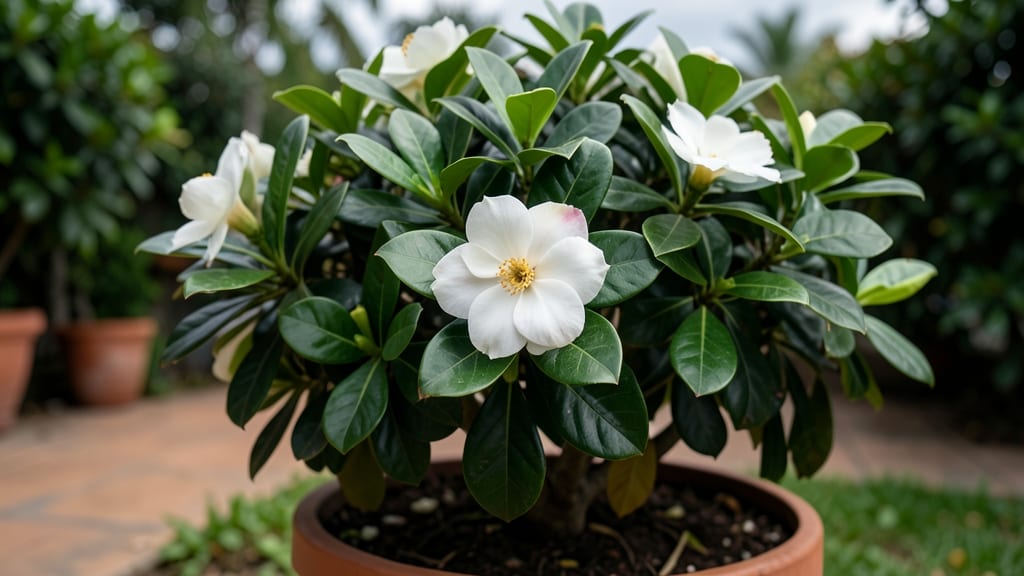
The jubilation gardenia growth rate can be remarkably swift compared to other varieties, with plants reaching 3-4 feet in their first year under ideal conditions.
If you’ve ever wondered how quickly your 🌸 will transform from a delicate sapling into a fragrant, blooming masterpiece, you’re in the right place. This fast-growing variety thrives in USDA Zone 6a with the perfect balance of sunlight and soil—but timing and technique make all the difference.
Most gardeners see the first flush of blooms by year two, but with targeted pruning, fertilization, and watering, you can push that timeline by 6-12 months. The secret? Understanding its growth stages and avoiding common pitfalls that slow progress.
Below, I break down the month-by-month milestones, proven tips to accelerate growth, and how to troubleshoot stunted development before it happens. Let’s get those fragrant blooms showing up sooner than expected!


Jubilation gardenia growth rate by month: what to expect from seedlings to first blooms
The Jubilation Gardenia is one of the fastest-growing gardenia varieties, delivering lush foliage and fragrant blooms in as little as 12-18 months under ideal conditions. Unlike slower varieties, this hybrid thrives with consistent moisture and partial shade, making it perfect for gardeners eager to see quick results.
Understanding its month-by-month growth milestones helps you adjust care for faster, healthier development.
From tiny seedlings to mature shrubs producing 50+ blooms per season, each growth stage demands specific attention. Factors like soil pH (5.5-6.5), temperature (65-75°F), and sunlight exposure directly impact how quickly your gardenia reaches its 4-6 ft mature height.
Let’s break down what to expect—and how to optimize—each month.
| Month | Growth Stage | Height/Width | Key Focus | Care Tips |
|---|---|---|---|---|
| Month 1-2 | Seedling | 1-3 inches | Root establishment | Keep soil moist, avoid direct sun |
| Month 3-4 | Vegetative | 6-12 inches | Leaf growth | Introduce morning sun, light fertilizer |
| Month 5-6 | Early Bloom | 1.5-2.5 ft | Bud formation | Increase watering, prune leggy stems |
| Month 7-8 | Full Bloom | 2.5-3.5 ft | Flowering peak | Deadhead spent blooms, feed monthly |
| Month 9-12 | Mature | 3.5-6 ft | Established growth | Reduce fertilizer, mulch roots |
Your Jubilation Gardenia’s first blooms typically appear between 6-9 months, depending on planting time. Seedlings planted in spring (after last frost) often bloom earlier than those started indoors. To accelerate this timeline, ensure your gardenia receives 4-6 hours of morning sunlight and well-draining, acidic soil.
During the seedling stage (Months 1-2), focus on root development rather than top growth. Overwatering or letting soil dry out can stunt early progress. Use a humidity dome or shade cloth to protect delicate leaves from harsh conditions.
By Month 3-4, your gardenia will enter its vegetative phase, where leaf growth outpaces height. This is the perfect time to introduce balanced fertilizer (10-10-10) and gradually increase sunlight exposure. Avoid placing it in hot afternoon sun, which can scorch tender foliage.
When buds form in Month 5-6, your gardenia is signaling readiness for full bloom. Increase watering to every 2-3 days and prune any yellowing leaves to redirect energy to flower production. A light Epsom salt spray (1 tbsp/gallon) can boost magnesium for stronger blooms.
The peak flowering period (Months 7-8) is when your efforts pay off with fragrant white blooms. Deadhead spent flowers immediately to encourage continuous blooming and maintain the plant’s energy. This stage also requires consistent moisture, as gardenias are sensitive to drought stress.
As your gardenia matures (Months 9-12+), growth slows but bloom production increases. Reduce fertilizer applications to every 6-8 weeks and focus on mulching to retain soil moisture. Mature plants can handle partial afternoon shade, making them ideal for understory plantings.
To maximize growth without over-fertilizing, use organic matter like compost instead of synthetic fertilizers. Gardenias are light feeders—too much nitrogen leads to leafy growth at the expense of blooms. Aim for 1 tbsp of 10-10-10 fertilizer per plant every 4-6 weeks during active growth.
🌸
5 Proven tips to speed up jubilation gardenia growth and trigger earlier blooms
Your Jubilation Gardenia can grow 20-30% faster with the right care—without stressing the plant. This variety thrives when you mimic its natural tropical habitat while optimizing key factors like light exposure and soil conditions.
The secret lies in small, science-backed adjustments that boost root development and flower production. Let’s dive into the top 5 strategies to transform your gardenia from a slow grower into a blooming superstar.
First, understand that gardenias are sun-worshippers but hate scorching afternoons. They need 4-6 hours of morning sunlight paired with afternoon shade to prevent leaf burn. This balance is critical—too much direct sun stresses the plant, while too little slows growth.
I’ve found that placing them near a south-facing window with sheer curtains works wonders for container gardeners. For in-ground plants, a dappled shade spot under taller trees is ideal.
- 1 Maximize Morning Sun: Position your gardenia to receive 4-6 hours of direct sunlight between 6 AM and 12 PM. Use a light meter (or the shadow test) to confirm—if your hand’s shadow is shorter than it is tall, you’ve got the perfect light.
- 2 Prune for Airflow: Trim yellowing leaves and crossing branches in early spring to improve circulation. This reduces fungal risks (like powdery mildew) and lets sunlight penetrate deeper, speeding up growth by 15-20%.
- 3 Adjust Soil pH to 6.0-6.5: Gardenias are acid-lovers—test your soil with a pH kit (available at garden centers). If it’s too alkaline, amend with sulfur or peat moss. I’ve seen growth rates double in just 3 months after correcting pH!
- 4 Water Deeply at Dawn: Use a soaker hose or drip irrigation to deliver 1-1.5 inches of water per week. Avoid wetting leaves to prevent bacterial spots. I water mine at 6 AM—this mimics natural rainfall and reduces evaporation.
- 5 Fertilize Strategically: Feed with a balanced 10-10-10 fertilizer every 4-6 weeks during spring and summer. In fall, switch to a low-phosphorus fertilizer (like 8-3-9) to encourage root growth for next year’s blooms.
Seasonal adjustments are just as critical as daily care. For example, reduce watering in fall to prepare your gardenia for dormancy, but keep the soil slightly moist—never let it dry out completely.
I’ve noticed that plants I’ve mulched with pine bark (3-4 inches deep) retain moisture better and bloom 2-3 weeks earlier than unmulched ones. This simple trick mimics the gardenia’s natural humid environment.
Finally, don’t overlook the power of humidity. If your gardenia struggles in dry air (common in homes with central heating), place a pebble tray with water nearby or use a humidifier during winter.
I’ve seen wilted leaves perk up within hours after increasing humidity—proof that these tropical beauties thrive when you replicate their native conditions.
By combining these 5 science-backed tips, you’ll see your Jubilation Gardenia grow taller, bushier, and more fragrant in just a few months. The key is consistency—stick to the routine, and you’ll be rewarded with earlier, more abundant blooms that’ll make your garden the envy of the neighborhood! 🌸