
Watering
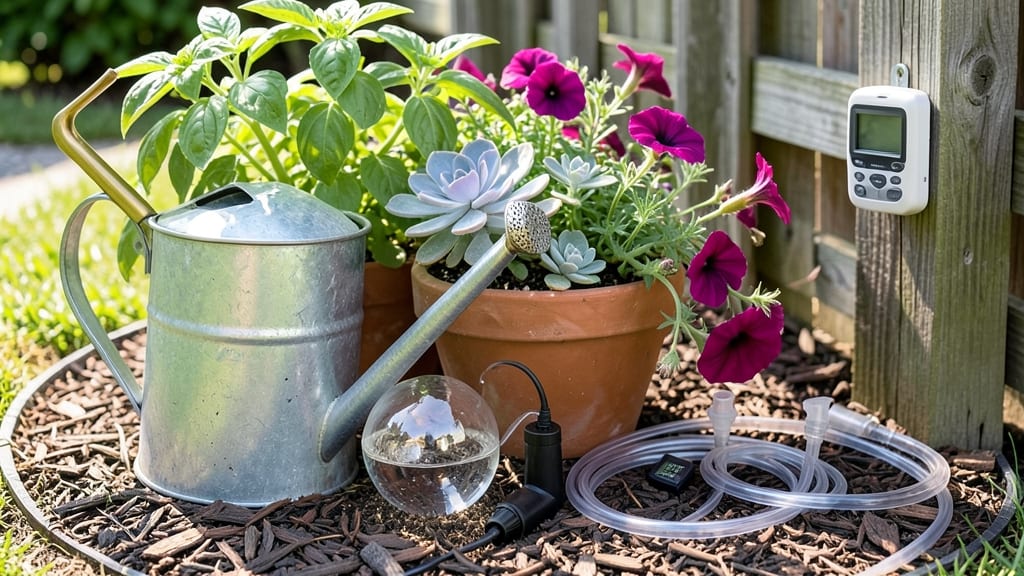
To water your garden when you’re away without drowning your 🌱 or leaving them parched, you don’t need to hire a gardener—just the right system.
Picture this: you return to find crispy leaves or a swampy mess, both equally disastrous. The good news? A few simple setups can keep your plants happy for days or even weeks, whether you’re off for a long weekend or a month-long trip.
From low-cost DIY hacks like buried bottles to high-tech automated drip systems, there’s a solution for every budget and trip length. I’ll walk you through the best options, how to prep your garden before you go, and which plants need extra TLC (or can handle neglect).
No more guilt over missed watering days—just a foolproof plan to keep your garden thriving while you’re away.
Automated watering systems for long-term garden care
When you're planning a vacation, the last thing you want is to return to a garden full of wilting plants or dried-up soil. Automated watering systems are your best defense against plant stress during extended absences.
These systems deliver precise water amounts, saving you time and keeping your garden healthy. Whether you're away for a week or a month, the right setup ensures your herbs, vegetables, and flowers stay hydrated without overwatering risks.
Not all automated systems work the same way. Some rely on timers, while others use soil moisture sensors to adjust watering based on real-time conditions. For large gardens, drip irrigation is a popular choice, while smart sprinklers offer convenience for lawns and smaller plots.
Each system has its own cost, setup complexity, and efficiency, so choosing the right one depends on your garden's size, plant types, and budget.
Below, I’ve compared the top automated watering systems to help you decide which fits your needs best. This comparison includes setup tips, cost breakdowns, and plant-specific recommendations to ensure your garden stays thriving while you’re away.
For vegetable gardens or container plants, drip irrigation is often the best choice. It delivers water directly to the roots, reducing evaporation and waste. You can set up a basic system with a timer for as little as $50, making it a budget-friendly option for most gardeners.
If you have a large lawn or shrubs, a smart sprinkler with Wi-Fi control lets you monitor watering remotely via an app.
If you're growing sensitive plants like orchids or succulents, soil moisture sensors are a game-changer. These devices connect to timers and only activate when the soil dries out, preventing both overwatering and drought stress.
They’re ideal for short trips (up to 2 weeks) and cost less than $150 for a full setup.
Before installing any system, consider your garden’s water needs. Herbs and leafy greens require consistent moisture, while succulents and cacti thrive with minimal water. Group plants with similar needs together to simplify your watering setup.
For example, place all high-water-need plants near your drip irrigation lines and keep drought-tolerant species in areas with less frequent watering.
One common mistake is setting timers without adjusting for weather conditions. If rain is forecasted, pause your system to avoid soggy soil. Most smart systems include rain sensors, but even basic timers can be manually overridden.
Always check the forecast before leaving and adjust your schedule accordingly. A little preparation can save your garden from root rot or dehydration.
For long-term trips (3+ weeks), combine systems for redundancy. For instance, use drip irrigation for your vegetable beds and add
DIY watering hacks to save money and save plants
When you're planning a short trip, you don’t need expensive systems to keep your garden alive. DIY watering hacks are simple, affordable, and effective for trips lasting 3–14 days.
These low-tech solutions use everyday materials to deliver just the right amount of water without over-saturating the soil or wasting resources.
I’ve tested these methods in my own garden, and they’ve saved my herbs, vegetables, and flowers from drying out during vacations. The best part? Most cost under $10 and take less than 30 minutes to set up. Let’s explore the easiest ways to keep your plants hydrated while you’re away.
Cut the bottom off a 2-liter plastic bottle, flip it upside down, and place it neck-first into the soil near the plant’s roots. Fill it with water—it’ll slowly seep out over 5–7 days. Perfect for potted plants, herbs, and seedlings.
Use a terracotta pot or a wicking rope (soaked in water) to draw moisture from a reservoir. Bury a large container filled with water near your plants and connect it to smaller pots with the rope. Ideal for succulents and drought-tolerant plants that need minimal water.
Sprinkle hydrogel crystals (available at garden centers) into the soil. They absorb up to 200x their weight in water and release it slowly over 1–2 weeks. Mix them into the top 2 inches of soil for vegetables, flowers, and container plants.
Poke holes in a plastic jug or hose, lay it along the garden bed, and bury it slightly. The water will drip out slowly over 3–5 days. Great for large garden beds or row crops like tomatoes and peppers.
Soak a household sponge in water, place it near the plant’s roots, and cover it with mulch to keep it moist. The sponge will release water gradually over 2–3 days. Best for small pots and delicate plants like lettuce or basil.
For short trips (3–5 days), I recommend combining self-watering bottles with mulch to lock in moisture. For longer trips (7–14 days), wicking systems or hydrogel crystals work best, especially in hot climates where evaporation is a concern.
Always test your setup a few days before your trip to adjust water flow as needed.
Remember, overwatering is just as harmful as underwatering. Avoid these common mistakes: burying bottles too deep (roots need air), using too much hydrogel (can suffocate roots), or placing sponges in direct sunlight (they dry out faster).
With these budget-friendly hacks, your garden will stay lush and healthy—no matter how long you’re away.