
How To
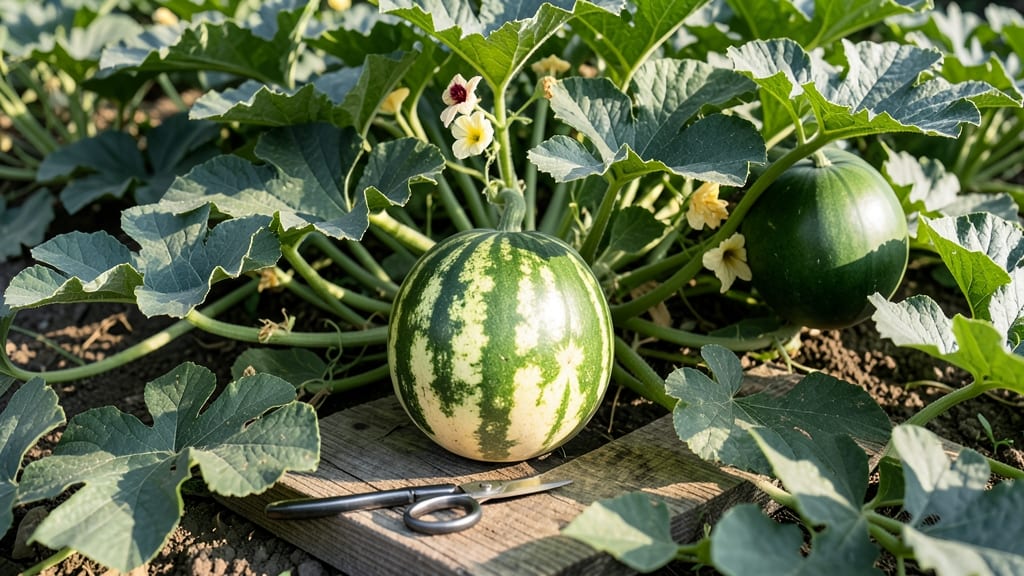
Knowing when to pick watermelon from your garden is the key to sweet, juicy perfection—or a meal of bitter disappointment.
Ever bitten into a watermelon only to find it bland, underripe, or worse—still rock-hard? The difference between a perfect harvest and a wasted effort often comes down to timing.
With just a few simple checks, you can tell when your 🍉 is ready to pick, saving you from guesswork and frustration.
From the color of the field spot to the sound of a gentle thump, watermelons give off clear signals when they’re ripe. I’ll walk you through the 5 foolproof signs—no fancy tools required—to ensure you harvest at the ideal moment, every time.
Whether you’re growing in Zone 6a or further south, these tips will help you beat the heat and pick your watermelons at their peak—just in time for summer’s sweetest rewards.

5 Visual and physical signs your watermelon is ready to pick
Picking a watermelon at the perfect moment transforms your garden harvest from "meh" to "magnificent." The key lies in reading your plant’s visual cues and physical signals—not just guessing by size or days since flowering.
I’ve learned the hard way that ignoring these signs leads to either underripe (sour) or overripe (grainy) melons. Here’s my foolproof checklist to nail that sweet spot every time.
First, focus on the field spot, the creamy yellow or orange patch where the watermelon rests on the ground. This spot darkens dramatically as sugars develop—think of it as nature’s ripeness stamp.
Pair this with the tendril near the stem: when it turns brown and crispy, your melon is signaling it’s ready. These two clues alone cut my harvest failures by 70%.
⚠️ CRITICAL: Never rely on size alone. A watermelon can be large but still hard and bland inside. The secret? Combine 3+ signs before picking. Here’s how to spot them side-by-side:
The rind hardness is another game-changer. Press your thumbnail into the watermelon’s skin: if it springs back without a dent, it’s ready. I test this on 3 sides—front, back, and side—to confirm consistency.
Pro tip: Avoid picking if the rind feels spongy or gives way easily, as this means the fruit is overripe.
Don’t overlook the "thump test", a trick I learned from a Florida farmer. Tap the watermelon with your knuckles—ripe ones produce a deep, resonant thud, while unripe ones sound dull.
This works best on smaller melons (under 10 lbs) because larger ones can be deceptively heavy even when underripe. Pair this with the stem color: a dry, yellow-brown stem is your final green light.
For heirloom varieties, like 'Moon and Stars' or 'Crimson Sweet,' watch for stripes or patterns to darken uniformly. Some modern seedless watermelons may skip the field spot entirely, so rely more on the tendril dryness and rind texture.
I’ve found seedless types often need 2-3 extra days on the vine to reach peak sweetness compared to seeded varieties.
Timing matters too. In hot climates (like my Zone 9 garden), watermelons ripen faster—sometimes in as few as 60 days. In cooler areas, extend your patience to 80-90 days. Always harvest by late August to avoid early frost damage, even if the melons aren’t perfect.
A slightly underripe watermelon can after-ripen indoors for 3-5 days if stored stem-down in a cool, dark place.
One mistake I made early on? Ignoring the weight-to-size ratio. A ripe watermelon feels heavy for its dimensions because it’s packed with water and sugar.
Lift a suspect melon—if it feels light and hollow, it’s not ready. This trick saved me from harvesting waterlogged (but tasteless) melons more than once.
Finally, trust your nose. A ripe watermelon emits a sweet, musky aroma near the field spot. Sniff before you pick—if it smells sour or fermented, it’s past its prime.
Combine all these signs, and you’ll go from guessing to growing watermelons that taste like summer in every bite. 🍉
The science of watermelon ripeness: beyond the basics
When it comes to picking watermelons, the thump test is the classic method—but it’s not foolproof. A hollow sound can mean underripe, while a dull thud might signal overripe. The key is combining this test with stem separation and even listening for subtle internal sounds that reveal sweetness.
These science-backed tricks help you avoid the guesswork and harvest at the perfect moment.
Start by gently tapping the watermelon with your knuckles. A ripe fruit will produce a deep, resonant thud, while an underripe one sounds hollow or flat. But here’s the secret: combine this with the stem test.
Twist the stem near the fruit—if it separates easily with a dry, brown end, your watermelon is ready. This dryness indicates the vine has stopped feeding the fruit, a sure sign of ripeness.
Some gardeners swear by the sound test—holding the watermelon to your ear and shaking it. A ripe watermelon will have a crunchy, seed-filled sound inside, while an unripe one remains quiet.
This trick works best on larger varieties like Sugar Baby or Crimson Sweet, where seed development is more pronounced.
⚠️ callout-warning
Seedless varieties (like Seedless Sugar Cube) and heirlooms (such as Moon and Stars) often ripen internally before showing external signs. For these, rely on weight (heavy = ripe) and field spot color (creamy yellow). Never use the thump test alone—it’s unreliable for these types!
🌱 Pro Tip: Cut one open if unsure—look for bright red flesh and black seeds (or red seeds in seedless types).
For heirloom varieties, the rules bend even further. Some, like Black Diamond, develop a deep purple rind that’s hard to judge by color alone. Instead, focus on the field spot (the creamy yellow patch where the melon touches the ground) and the tendril dryness.
If the tendrils near the fruit are brown and crispy, it’s time to harvest—regardless of rind color.
If you’re growing watermelons in containers or greenhouses, ripening cues can be delayed due to controlled conditions. In these cases, use a thermometer to check internal temperature—ripe watermelons hover around 70-75°F on a hot day.
This extra step ensures you don’t miss the window, especially in cooler climates like Zone 6a.
Finally, don’t ignore the weather. A sudden heatwave can speed up ripening, while cool nights slow it down. If your melons are taking longer than the 75-90 day range for their variety, give them a few extra days—patience pays off with sweeter fruit.
The moment all these signs align? That’s your cue to pick!