
Light Requirements
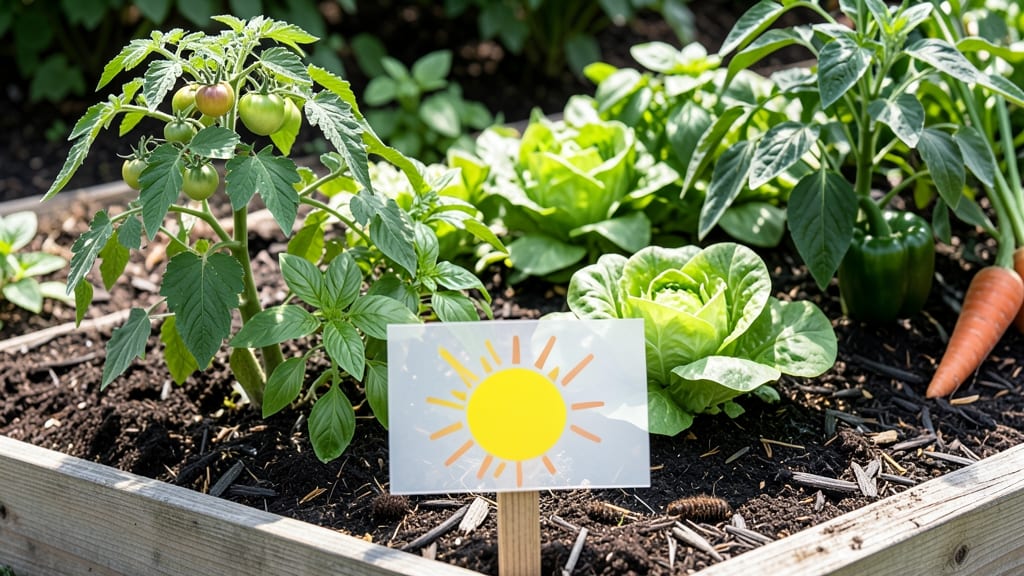
To get your vegetable garden thriving, how much sun does a vegetable garden need? Most crops require 6 to 8 hours of sunlight daily—but not all plants follow the same rule, and getting it wrong can mean the difference between a bountiful harvest and a sad, wilted disappointment.
Picture this: you’ve spent weeks preparing your soil, selected the best seeds, and even marked the rows with care—but your tomatoes refuse to ripen, your lettuce bolts to seed, and your peppers stay stubbornly green.
The culprit? Too little sun, too much shade, or planting in the wrong spot. Sunlight isn’t just light—it’s fuel, and every vegetable has its own energy requirements.
Here’s the good news: once you know the exact light needs for each crop—from sun-loving tomatoes to shade-tolerant leafy greens—you can design a garden that works with your yard’s natural light.
Whether you’re dealing with a bright, open space or a shady corner, we’ll break down the science behind sunlight requirements and show you how to position your plants for success.
Ready to stop guessing? By the end of this guide, you’ll know exactly where to plant every seed in your vegetable garden, so you can finally enjoy the harvest you’ve been dreaming of—no more trial and error, just proven results.

Sunlight requirements for vegetable garden crops: full sun vs partial shade guide
Sunlight is the lifeblood of your vegetable garden—yet most gardeners misjudge how much each crop truly needs. Tomatoes wilting in partial shade or lettuce bolting in full sun are classic signs of getting it wrong.
The key lies in understanding light intensity thresholds and matching them to your garden's microclimates. Let’s break down the science and practicalities so you can position every plant for success.
Vegetables fall into three broad categories based on their sunlight requirements: full sun lovers (6+ hours of direct light), partial shade tolerate (3-6 hours), and low-light adaptable (2-4 hours). Full sun crops like peppers and cucumbers thrive with 8+ hours of light, while leafy greens and herbs often prefer dappled shade to prevent bitterness.
Ignoring these distinctions can lead to stunted growth, poor yields, or even plant death.
Before we dive into specifics, here’s a quick reference to help you visualize the ideal conditions for your garden. Use this sunlight guide to map out your planting zones and avoid common mistakes like crowding sun-hungry plants together or shading delicate greens.
| Vegetable | Sunlight Needs | Ideal Hours/Day | Growth Impact |
|---|---|---|---|
| Tomatoes | Full Sun | 6–8+ hours | Poor fruit set, weak vines |
| Peppers | Full Sun | 8+ hours | Stunted growth, fewer peppers |
| Cucumbers | Full Sun | 6–8 hours | Bitter taste, powdery mildew |
| Spinach | Partial Shade | 3–5 hours | Bolting, bitter leaves |
| Lettuce | Partial Shade | 2–4 hours | Yellowing, slow growth |
| Basil | Partial Shade | 4–6 hours | Loses flavor, leggy stems |
| Carrots | Low Light | 2–4 hours | Deformed roots, slow growth |
| Green Onions | Low Light | 3–5 hours | Thin, weak stems |
| Radishes | Partial Shade | 3–4 hours | Pithy texture, slow harvest |
For full sun crops, aim for 6+ hours of direct sunlight daily. These plants rely on intense light to produce energy for fruit development. Tomatoes, for example, need 8+ hours to prevent blossom end rot, while peppers and eggplants thrive with full afternoon sun.
If your garden lacks direct sunlight, consider container gardening near a south-facing window or using reflective surfaces like white walls to bounce extra light onto plants.
Partial shade crops, like leafy greens and herbs, tolerate 3-6 hours of sunlight but avoid harsh afternoon rays. Lettuce and spinach grow best with morning sun and afternoon shade, which prevents bolting.
In hot climates, even partial shade crops may need afternoon relief to avoid wilting. Use drip irrigation and shade cloth (30-50% coverage) to mimic ideal conditions.
Low-light crops, such as carrots and green onions, adapt to 2-4 hours of sunlight and are perfect for shady garden corners. These vegetables prioritize root or stalk development over leafy growth, making them ideal for understory planting near taller crops.
If you’re working with deep shade (e.g., under fruit trees), opt for microgreens or bok choy, which tolerate minimal light.
Pro tip: Observe your garden’s sunlight patterns for a full week before planting. Use a
How to measure and optimize sunlight in your garden layout
Getting your garden's sunlight right isn't just guesswork—it's the foundation of a thriving vegetable patch. I've learned that even a few hours difference in sun exposure can mean the difference between bountiful harvests and wilted disappointment.
The key is understanding how sunlight moves across your space throughout the day and using that knowledge to strategically place each plant.
Most gardeners overlook the fact that morning sun behaves differently than afternoon sun. Morning sunlight is cooler and less intense, while afternoon sun can scorch delicate leaves. I've seen firsthand how tomatoes planted in only morning sun produce fewer fruits compared to those getting afternoon warmth.
Let's break down how to measure your garden's light patterns accurately.
Step-by-Step Sunlight Assessment
-
Step 1: Observe for a Week
Place a sunlight journal or app (like SunCalc) in your garden. Record sun patterns for 7 days to account for weather variations. Note when shadows appear and disappear. -
Step 2: Test with Stakes
Drive wooden stakes into your garden at 12-inch intervals. Mark where shadows fall every 2 hours. This creates a visual map of your sunlight zones. -
Step 3: Measure Structures
Use a tape measure to record how much shade nearby trees, fences, or buildings cast at peak sun (10 AM and 2 PM). Permanent shade areas should be noted for shade-tolerant crops. -
Step 4: Use a Sun Calculator
Input your location into a free sun calculator (like the National Renewable Energy Laboratory's tool) to see exact sun angles. This helps predict future sunlight changes due to seasonal shifts. -
Step 5: Adjust for Microclimates
South-facing areas get the most sun, while north sides often remain cooler. I've found that west-facing beds can get too hot for some plants, while east-facing spots offer gentle morning light. -
Step 6: Plan Companion Planting
Group full-sun lovers (tomatoes, peppers) together in the hottest spots. Place partial-shade plants (lettuce, spinach) where taller crops cast afternoon shade naturally.
Once you've mapped your garden's sunlight, you'll notice some areas get 6+ hours of direct sun, perfect for tomatoes and peppers, while others might only receive 3-4 hours, ideal for leafy greens.
I've even used reflective mulch in shady spots to bounce extra light onto struggling plants. This simple trick can extend growing seasons for light-sensitive crops.
Don't forget to account for seasonal changes. What's full sun in summer might become partial shade in winter. I adjust my planting layout every spring after reviewing my sunlight map.
For example, I move my basil plants to sunnier spots as the sun shifts higher in the sky. This proactive approach saves me from replanting failed crops later in the season.
For container gardeners, rotate pots every few weeks to ensure even sunlight exposure. I've seen herbs in pots grow lopsided when left in one spot too long.
A little rotation keeps them balanced and productive. With these steps, you'll transform your garden from a guessing game into a sunlight-optimized powerhouse.