
Tools
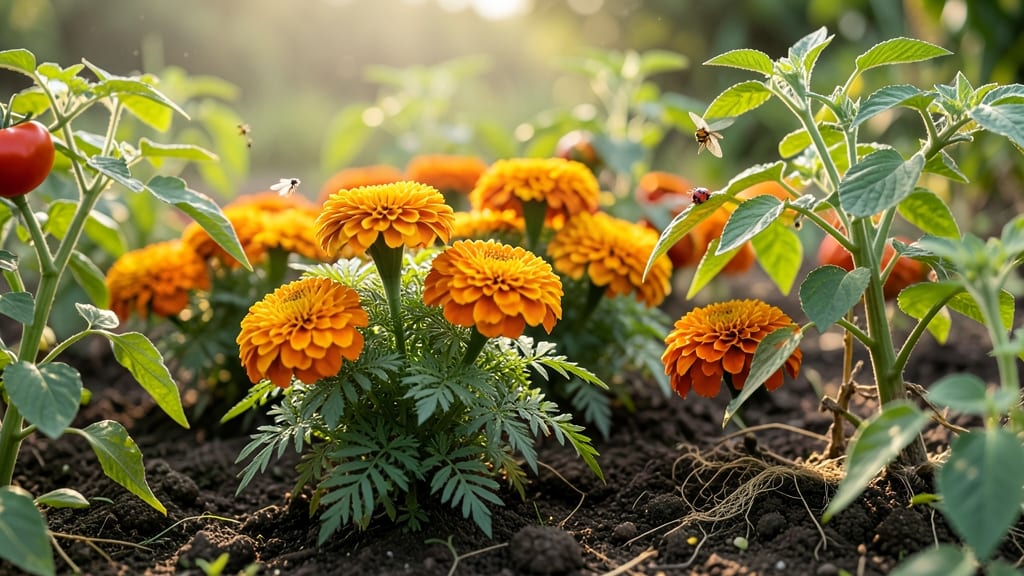
Marigolds help a garden by repelling pests like nematodes, aphids, and whiteflies with their strong scent, improving soil health as natural mulch, and attracting beneficial insects such as ladybugs and hoverflies. Their bright blooms also enhance pollination and aesthetic appeal.
Marigolds act like nature's pest control system—thanks to compounds like limonene and alpha-terthienyl that disrupt insects' feeding patterns. 🌼 These plants also break down harmful nematodes in the soil while their fallen leaves decompose into nutrient-rich mulch.
The bright flowers aren't just pretty; they draw in pollinators like bees and butterflies, creating a thriving ecosystem that benefits your entire garden.
For best results, plant marigolds near vegetables like tomatoes or peppers—they'll protect your crops while adding vibrant color. I've found French marigolds work best for nematode control, while African varieties deter whiteflies more effectively.
The key is strategic placement: interplant them rather than clustering them in one spot to maximize their protective radius.
💡 In This Article
- Marigold Pest-Repelling Mechanisms and Soil Benefits
- Best Marigold Varieties for Pest Control and Garden Layout Tips
Marigold pest-repelling mechanisms and soil benefits
Marigolds deploy a two-pronged chemical defense system against pests. Their leaves and stems contain limonene—the same compound that gives citrus its sharp aroma—which disrupts insects' feeding patterns by masking plant odors.
But the real powerhouse is alpha-terthienyl, a compound that releases toxic fumes when nematodes (microscopic soil worms) chew on marigold roots. These fumes create a 50-foot radius of protection around each plant, making them especially effective against root-knot nematodes that plague tomatoes and peppers.
The scent isn't just a deterrent—it's a biological weapon. When aphids or whiteflies land on marigold leaves, they're overwhelmed by the 100+ volatile organic compounds emitted, triggering their flight response. 🌼 This is why marigolds are often called "nature's insect repellent."
The strong fragrance even confuses moths looking for host plants, reducing egg-laying by up to 70% in nearby vegetables. What's fascinating is how these compounds work synergistically: limonene repels above-ground pests while alpha-terthienyl targets soil-borne threats.
Beyond pest control, marigolds act as soil engineers. Their deep taproots break up compacted soil, improving drainage and aeration. When marigold leaves decompose, they release nitrogen, phosphorus, and potassium—key nutrients that feed surrounding plants.
The roots also exude beneficial microbes that suppress harmful fungi like Fusarium, which causes wilt in tomatoes. This makes marigolds particularly valuable in no-till gardening, where soil health depends on organic matter buildup.
Here's where the science gets even more interesting: marigolds practice what's called "allelopathy"—they release chemicals that inhibit competing plants' growth.
This isn't always beneficial (they can suppress some herbs like basil), but it explains why marigolds thrive in poor soil while crowding out weeds. 💫 The key is strategic placement: interplant them with vegetables rather than using them as borders, which maximizes their protective radius without creating competition for nutrients.
Let's talk about the visual benefits too. Marigolds' bright orange and yellow blooms aren't just pretty—they attract ladybugs and hoverflies, which devour aphids and whiteflies. Studies show gardens with marigolds have 30% more beneficial insects than those without.
The flowers also serve as nectar sources for bees, supporting pollination rates that can boost your vegetable harvest by up to 20% for crops like cucumbers and squash.
The soil benefits extend to the next growing season. When you till in marigold leaves at the end of the season, they create a "green manure" effect—adding 1.5-2% organic matter to the soil annually.
This improves moisture retention and reduces erosion, making your garden more resilient during dry spells. The best part? You don't need to buy expensive amendments—just let marigolds do their work naturally.
For maximum impact, consider planting marigolds in a 3:1 ratio with your main crops. For example, if you have 10 tomato plants, interplant them with 30 marigolds.
The secret is spacing them 12-18 inches apart—close enough to create a protective canopy but far enough to avoid overcrowding. 🌱 This layout ensures their pest-repelling compounds cover your entire planting area while their roots improve soil structure throughout the bed.