
Planting
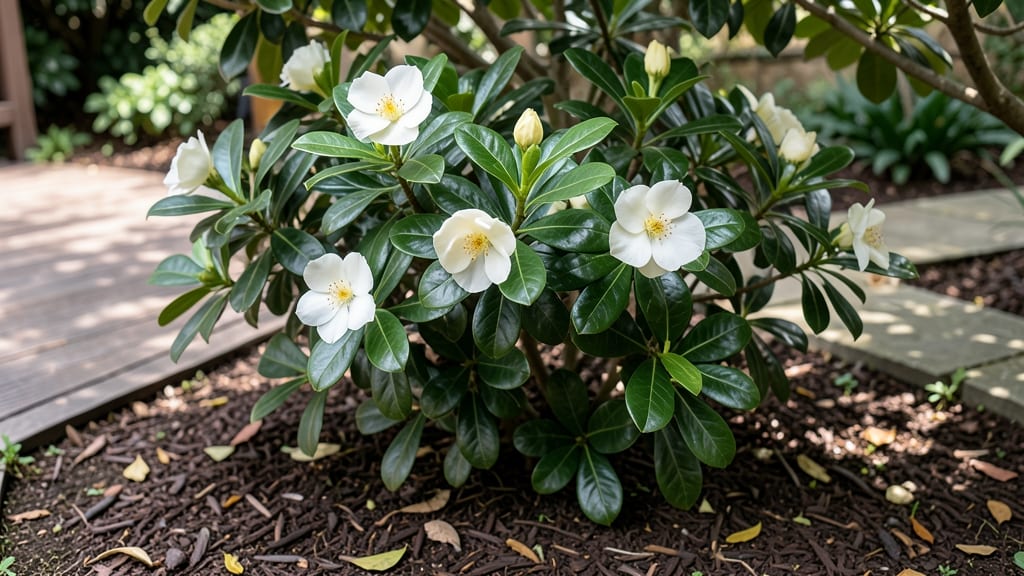
Gardenias can grow successfully in Zone 5 with proper winter protection and microclimate adjustments, since these tropical plants need to stay above 20°F (-6°C) to prevent frost damage. Plant in sheltered locations, apply thick mulch, and move potted plants indoors during cold months.
Zone 5 gardeners face a unique challenge because gardenias originate in warm climates where freezing temperatures don't exist.
The key is creating a protected environment that mimics their natural habitat. 🌿 I've found that planting near south-facing walls or using evergreen windbreaks can raise microclimate temperatures by 5-10°F, making a significant difference during hard freezes.
For container gardenias, moving them to unheated garages or basements with proper ventilation keeps them alive through winter.
What separates successful Zone 5 gardenia growers is their attention to soil insulation. A 4-6 inch layer of organic mulch like shredded bark or straw acts as a thermal blanket, protecting roots from sudden temperature drops.
I always recommend testing your gardenia's cold tolerance by gradually acclimating it to cooler fall temperatures before winter sets in.
💡 In This Article
- Gardenia Cold-Hardiness Limits in Zone 5
- Zone 5 Microclimate Strategies for Gardenias
Gardenia cold-hardiness limits in Zone 5
Gardenias originate from tropical and subtropical regions where temperatures rarely drop below 60°F (15°C), making them highly sensitive to Zone 5's winter extremes. The critical threshold for gardenia survival is 20°F (-6°C), below which cell membranes in leaves and stems begin to rupture due to ice crystal formation.
This damage triggers a chain reaction where water loss accelerates, leading to leaf scorch and eventual dieback. 🌱 The most cold-tolerant varieties like Gardenia jasminoides 'Kleim's Hardy' can handle brief dips to 15°F (-9°C) when fully dormant, but prolonged exposure below 20°F (-6°C) will still cause significant stress.
What makes gardenias particularly vulnerable is their evergreen nature—they don't enter true dormancy like deciduous plants. Instead, they maintain metabolic activity year-round, which requires consistent energy production. When temperatures plummet, photosynthesis slows dramatically, depriving the plant of the glucose needed to repair frost damage.
Studies show that gardenias exposed to 10°F (-12°C) for just 2 hours experience 30-50% leaf mortality, with roots suffering irreversible damage at 15°F (-9°C) or lower. This explains why even "hardy" gardenia varieties need winter protection in Zone 5.
The USDA hardiness zone system categorizes plants based on their ability to survive the coldest winter temperatures in a given area. Zone 5's minimum average annual temperature is -20°F to -10°F (-29°C to -23°C), which is 10-20°F colder than gardenias can naturally tolerate.
The key insight is that hardiness zones represent average conditions—not extreme events. A single hard freeze to -5°F (-21°C) can push gardenias beyond their physiological limits, even if the average winter low is -15°F (-26°C). This is why microclimate strategies become essential.
Not all gardenia varieties respond equally to cold stress. Gardenia jasminoides 'Radicans' shows slightly better cold tolerance than standard varieties, with some growers reporting survival in 15°F (-9°C) when roots are deeply mulched.
However, the difference in cold resistance between varieties is typically only 2-5°F (1-3°C), making winter protection equally critical for all types. The real advantage of cold-hardy selections lies in their ability to recover more quickly from winter damage, often resprouting from the base rather than dying back completely. 🌿
Understanding gardenia cold tolerance also requires recognizing the role of acclimation. Plants gradually adjust to cooler temperatures in fall by increasing levels of protective compounds like proline and sugars that act as antifreeze agents.
Without proper fall hardening—where daytime temperatures drop to 50°F (10°C) and nights reach 40°F (4°C) for 2-3 weeks—gardenias lack these natural defenses. This is why many Zone 5 gardeners report better survival rates when they start protecting their plants in late September rather than waiting for the first frost.
To put these thresholds in perspective, consider that a typical Zone 5 winter might include 10-15 days below 20°F (-6°C), with occasional dips to 0°F (-18°C) during polar vortex events. Even the hardiest gardenia varieties would struggle to survive prolonged exposure to these conditions without intervention.
The solution lies in creating localized environments where temperatures remain above the 20°F (-6°C) threshold, which is where microclimate strategies come into play. 💫