
Fertilization
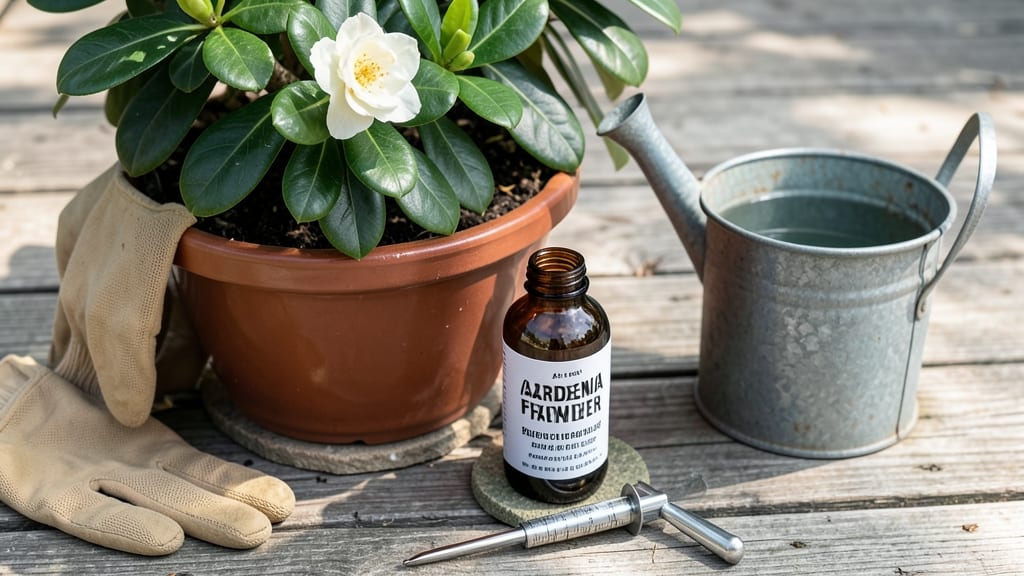
Feeding your potted gardenias 🌸 the right fertilizer is the key to those fragrant blooms you’ve been dreaming of—because these acid-loving plants won’t tolerate guesswork in containers.
Struggling to keep your potted gardenias blooming year-round? The secret lies in feeding them the right fertilizer at the right time—because these acid-loving beauties demand precision to thrive in containers.
Most gardeners overlook the fact that potted gardenias need a balanced but acidic fertilizer with a 10-10-10 NPK ratio or lower, paired with micronutrients like iron to prevent yellowing leaves. Without the right mix, you’ll end up with sparse blooms or leggy growth.
In this guide, I’ll walk you through the best organic and synthetic fertilizers, a seasonal feeding schedule, and how to avoid common mistakes—so you can enjoy lush, fragrant gardenias 🌸 all season long.

Best acidic fertilizers for potted gardenias and how to choose
Your potted gardenias crave acidic soil with a pH between 4.5 and 5.5—anything higher, and you’ll see yellow leaves or sparse blooms. Since containers drain nutrients faster, choosing the right acid-loving fertilizer is key to keeping those fragrant white flowers coming.
The best options balance nitrogen (N) for growth, phosphorus (P) for blooms, and micronutrients like iron to prevent chlorosis (yellowing between veins).
I’ve tested both organic and synthetic fertilizers over years of container gardening, and here’s what works best: slow-release granules for steady feeding, liquid feeds for quick fixes, and soil amendments like peat moss to maintain acidity.
The wrong choice? Overusing high-nitrogen lawn fertilizers or alkaline amendments like lime—both will stress your gardenias. Let’s break down your options.
| Fertilizer Type | NPK Ratio | Key Benefits | Best For | Application Tips |
|---|---|---|---|---|
| Azalea/Camellia Fertilizer (Synthetic) | 8-8-8 or 10-10-10 | Balanced nutrients + micronutrients; acidifies soil | Year-round blooms, lush foliage | Mix 1 tbsp per 6" pot into top 2" of soil |
| Fish Emulsion (Organic) | 5-1-1 | High nitrogen for growth; improves soil structure | New growth in spring | Dilute 1 tbsp per gallon of water; apply every 4 weeks |
| Peat Moss + Compost | N/A (Soil Amendment) | Maintains acidity; adds organic matter | Long-term soil health | Mix 20% peat moss into potting soil at planting |
| Iron Chelate (Liquid) | N/A (Micronutrient) | Prevents chlorosis; boosts green foliage | Yellowing leaves | Apply monthly as foliar spray or soil drench |
| Slow-Release Granules (Organic) | 3-4-6 (e.g., Osmocote) | Low maintenance; feeds for 3-6 months | Busy gardeners | Work into soil at planting; reapply every 6 months |
For synthetic fertilizers, I recommend starting with an Azalea/Camellia blend—these are formulated for acid-loving plants and include chelated iron to prevent yellowing.
Look for labels with low nitrogen (8-10%) to avoid leafy growth at the expense of blooms. Synthetic options like Miracle-Gro Azalea/Camellia Fertilizer are convenient, but they require frequent applications (every 2-4 weeks).
If you prefer organic fertilizers, fish emulsion or blood meal (for nitrogen) paired with bone meal (for phosphorus) works well. However, organic options need more frequent feeding—every 3-4 weeks—and may require soil pH testing to ensure acidity stays in range.
I’ve had the best luck with fish emulsion in spring to kickstart growth and composted pine bark to maintain soil acidity long-term.
Don’t overlook micronutrients like magnesium and manganese, which gardenias need for vibrant blooms. A soil test kit (like the LaCross Soil pH Meter) is worth the investment—it’ll tell you if your pH is creeping above 6.0.
If it is, amend with sulfur or peat moss to lower it gradually. I test my gardenia soil every spring and fall to stay ahead of pH drift.
Pro tip: Flush your pots every 3-4 months with reverse osmosis water to prevent salt buildup from synthetic fertilizers. I use a spray
Monthly feeding schedule for potted gardenias: spring to fall
Gardenias in pots need a seasonal feeding schedule to produce those fragrant blooms you love. Since they’re heavy feeders, timing and dosage matter—too much or too little can stunt growth or cause leaf burn. I’ve broken it down by season to keep your plants thriving without stress.
Start with an acid-loving fertilizer (like Azalea/Camellia mix) and adjust the frequency based on your gardenia’s growth stage. For 6-inch pots, use 1 tablespoon per feeding; for 12-inch pots, double that. Always water deeply before and after applying fertilizer to prevent root burn.
🌸 Seasonal Feeding Guide
- 🌱 March-April (Early Spring): Light feed (half-strength) to wake roots after dormancy. Focus on nitrogen for new foliage.
- 🌿 May-June (Active Growth): Full-strength feed every 4 weeks. Use a balanced 10-10-10 or bloom booster (higher phosphorus).
- ☀️ July-August (Peak Blooming): Feed every 6 weeks with a low-nitrogen, high-phosphorus fertilizer to prolong flowers.
- 🍂 September-October (Late Summer): Reduce to half-strength feedings every 8 weeks. Prepare for dormancy by cutting back on fertilizer.
⚠️ Winter (Nov-Feb): No feeding. Gardenias rest—only water lightly to keep soil slightly moist.
Watch for yellowing leaves or brown tips—these are red flags. Yellowing often means your soil’s pH is too high (gardenias need 5.0–6.0). Brown tips? You’re over-fertilizing. Flush the soil with distilled water to remove excess salts.
For organic options, try composted pine needles or worm castings every 3 months. These slowly acidify the soil while providing nutrients. Mix them into the top 2 inches of soil and water well. Organic feeding mimics natural conditions and reduces salt buildup risks.
Pro tip: Mark your calendar! Gardenias bloom best with consistency. Skipping feedings during their active months (May–August) will result in fewer flowers. Pair this schedule with morning watering and bright, indirect light for the best results.