
Fertilization
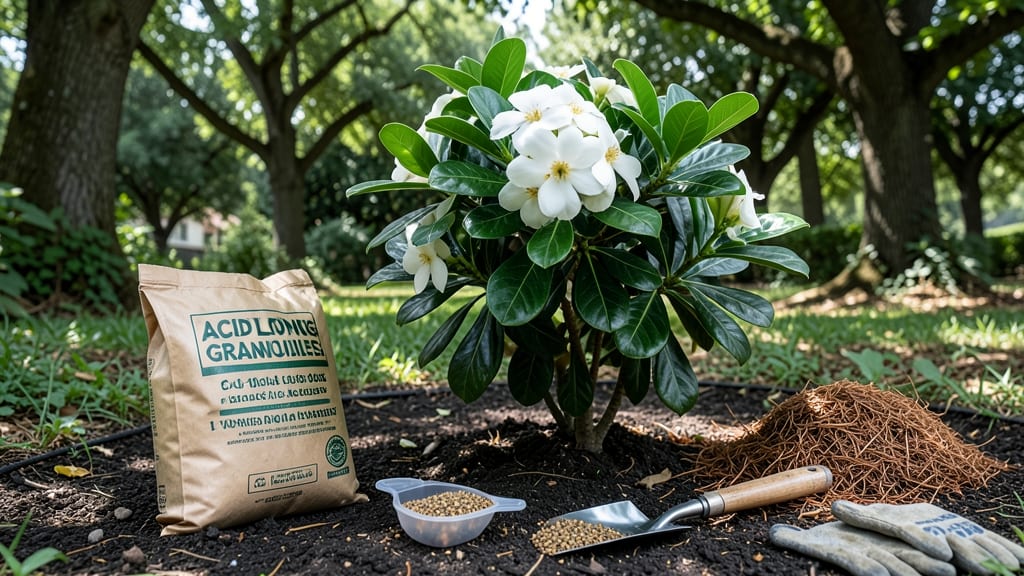
To feed a gardenia tree 🌸 properly, you need a fertilizer designed for acid-loving plants—one that mimics the rich, organic soil they crave in their native habitats.
Struggling to get your gardenia tree to bloom? The secret lies in feeding it the right fertilizer—acid-loving plants like gardenias demand specific nutrients to thrive and produce stunning flowers.
Most gardeners make the mistake of using generic fertilizers, which can actually harm these delicate shrubs by throwing off their pH balance. A 6-6-6 or 8-3-9 ratio with acid-forming ingredients is the gold standard, but timing matters just as much as the formula.
In this guide, I’ll walk you through the best organic and synthetic options, when to apply them, and how to spot the signs of over- or under-feeding so your gardenia thrives year after year.

Best acidic fertilizers for gardenia trees to maximize blooms
Your gardenia tree deserves the right nutrition to reward you with those fragrant, creamy-white blooms. Since gardenias thrive in acidic soil (pH 5.0-6.5), choosing the wrong fertilizer can stunt growth or even kill your plant.
The key lies in selecting an acid-forming fertilizer with the right nutrient balance—typically a 6-6-6 or 8-3-9 NPK ratio—to promote both lush foliage and abundant flowers.
Not all fertilizers are created equal, especially for acid-loving plants. Synthetic options like Miracle-Gro Acid-Loving Plant Food provide quick results, while organic choices such as pine bark fines or cottonseed meal improve soil health over time.
Both have their place, but the best choice depends on your gardening goals and soil conditions. Let’s break down the top options to help your gardenia flourish.
For foliage-heavy growth, opt for a fertilizer with a higher first number (nitrogen), like a 10-4-6 ratio. However, gardenias need a balanced approach to encourage blooms. A 6-6-6 or 8
How to apply fertilizer for gardenia trees without burning roots
Gardenia trees reward careful feeding with fragrant blooms and lush foliage, but their delicate roots are sensitive to over-fertilization. The key is timing, dilution, and understanding your plant's seasonal needs.
Unlike hardy shrubs, gardenias need gentle, acidic nutrition—too much fertilizer can scorch roots and stunt growth. Let's break down the safe way to feed your gardenia without causing damage.
First, always test your soil's pH before fertilizing—gardenias thrive in acidic soil (5.0-6.5). If your soil is too alkaline, even the best fertilizer won't work. You can use a home soil test kit or send a sample to your local extension office.
Once you confirm the pH, it's time to choose the right fertilizer and apply it correctly to avoid root burn.
⚠️ Warning: Signs of Over-Fertilization in Gardenias
Yellowing leaves with brown crispy edges are classic signs of fertilizer burn. If you see white crust on soil or stunted growth, flush the soil with water immediately. Gardenias also drop buds when stressed—this often happens after over-fertilizing in late summer.
Solution: Stop fertilizing and water deeply to leach out excess salts. Use rainwater or distilled water for flushing to avoid adding more minerals.
For spring feeding (March-May), use a balanced acid fertilizer with an NPK ratio of 6-6-6 or 8-3-9. Apply half the recommended dose and water thoroughly. In early summer, switch to a low-nitrogen, high-phosphorus formula (like 3-6-6) to encourage blooming.
Always dilute liquid fertilizers to half strength—this prevents salt buildup that burns roots.
Seasonal adjustments are critical. Never fertilize in fall or winter—this forces new growth that won't survive cold temperatures. Instead, focus on mulching with pine needles or peat moss to maintain soil acidity naturally.
In hot summer months, reduce feeding to every 6-8 weeks to avoid stressing the plant before dormancy.
When applying fertilizer, scatter granules 2-3 inches away from the trunk and lightly scratch into the top 1-2 inches of soil. For liquid fertilizers, mix with water and apply to the soil surface—not leaves.
Always water before and after fertilizing to help nutrients penetrate and prevent salt buildup. This method ensures your gardenia gets the nutrition it needs without damaging sensitive roots.
Pro tip: Use a slow-release fertilizer like Osmacote or Miracle-Gro Shake 'n Feed for gardenias. These formulas release nutrients gradually, reducing the risk of over-fertilization. Pair this with monthly applications of compost tea for a gentle organic boost.
With the right approach, your gardenia will reward you with abundant blooms and healthy growth all season.