
Vegetables
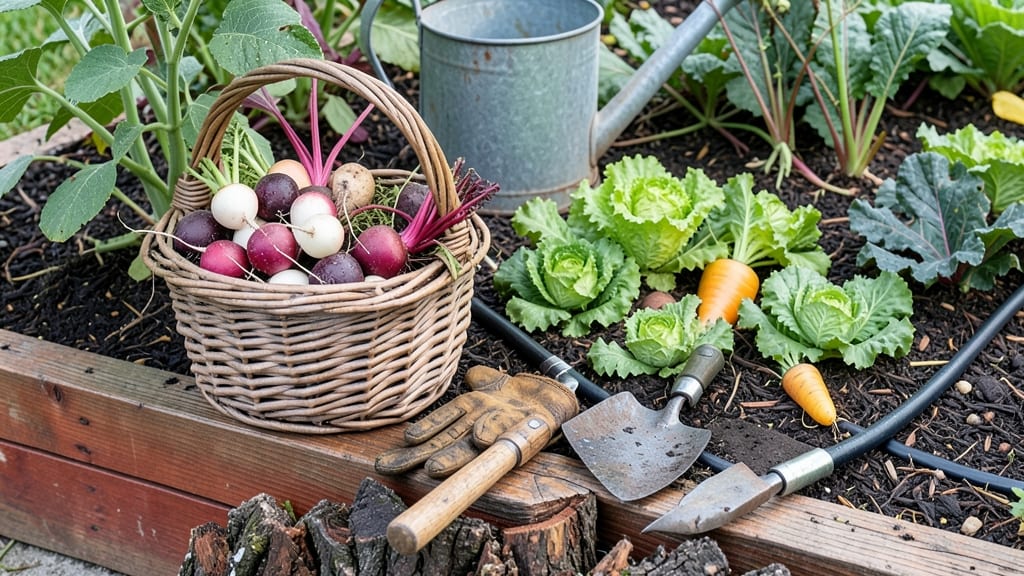
The Fenway Victory Gardens in Boston transformed vacant lots into communal vegetable plots during WWII, producing fresh produce to support the war effort while fostering sustainable gardening practices. Their impact extended beyond food security, creating a lasting model for urban agriculture.
The Fenway Victory Gardens weren't just about growing food—they were a grassroots movement that turned Boston's empty spaces into thriving farms. 🌱 During WWII, these gardens helped combat food shortages by producing over 40% of the nation's vegetables, with Boston's efforts contributing significantly to local resilience.
What's fascinating is how these plots became classrooms for sustainable practices, teaching generations about soil health and crop rotation.
Today, the spirit of these gardens lives on through initiatives like the Fenway Community Land Trust, which revitalizes urban farming in the city. These modern projects use similar principles but adapt them with hydroponics and vertical gardening to maximize space.
Whether you're a seasoned gardener or just starting, the Fenway Victory Gardens prove that community-driven agriculture can thrive in urban environments.
💡 In This Article
- How WWII Victory Gardens Fed Boston’s Community
- Modern Fenway Gardens: Reviving Urban Farming Today
How WWII victory gardens fed Boston’s community
During WWII, the Fenway Victory Gardens were part of a nationwide movement that transformed over 40 million acres of land into productive farms. In Boston alone, these gardens produced an estimated 10 million pounds of fresh produce annually, supplying everything from leafy greens to root vegetables.
The gardens focused on high-yield, nutrient-dense crops like potatoes, carrots, and cabbage—staples that were both easy to grow and essential for wartime diets. 🌱 The soil preparation was meticulous: gardeners mixed compost with sand and clay to create well-draining beds, often using simple tools like shovels and hoes to maintain fertility without chemical fertilizers.
The success of these gardens wasn’t just about agriculture—it was about organization. Local volunteers formed committees to distribute seeds, tools, and gardening advice to participants, many of whom were women, children, or elderly residents.
The U.S. government even provided free seeds and pamphlets on gardening techniques, ensuring even beginners could contribute. What’s striking is how these gardens addressed both food shortages and morale: growing your own produce gave people a sense of purpose and self-sufficiency during a time of rationing and uncertainty.
One of the most fascinating aspects was the adaptability of these gardens. Urban plots in Boston were often small—sometimes just 10x20 feet—but gardeners used intensive planting methods like succession planting (sowing seeds in staggered rows) to maximize yields.
For example, after harvesting early radishes, they’d replant the space with lettuce or beans, ensuring no soil went to waste. This approach mirrors modern square-foot gardening but was pioneered out of necessity during the war.
The impact on Boston’s food supply was immediate and tangible. With commercial shipping disrupted by the war, Victory Gardens filled the gap by providing fresh, local produce that would otherwise have come from distant farms.
Studies from the era show that these gardens reduced the strain on grocery stores by 20-30% in some cities, giving families access to vitamins and nutrients that were scarce in rationed foods. The gardens also served as a social hub, where neighbors shared knowledge and labor, strengthening community ties.
What’s often overlooked is how these gardens laid the foundation for modern urban farming. Techniques like crop rotation, companion planting (growing compatible plants together), and water conservation were all refined in these wartime plots.
For instance, gardeners in Boston learned to mulch with straw to retain moisture—a practice still used today in drought-prone cities. The legacy isn’t just historical; it’s a blueprint for how communities can reclaim urban spaces to grow food sustainably.
If you’ve ever wondered how a city like Boston survived food shortages during WWII, the answer lies in these gardens. They weren’t just plots of land—they were a testament to resilience, innovation, and the power of community-driven solutions. 💫