
Light Requirements
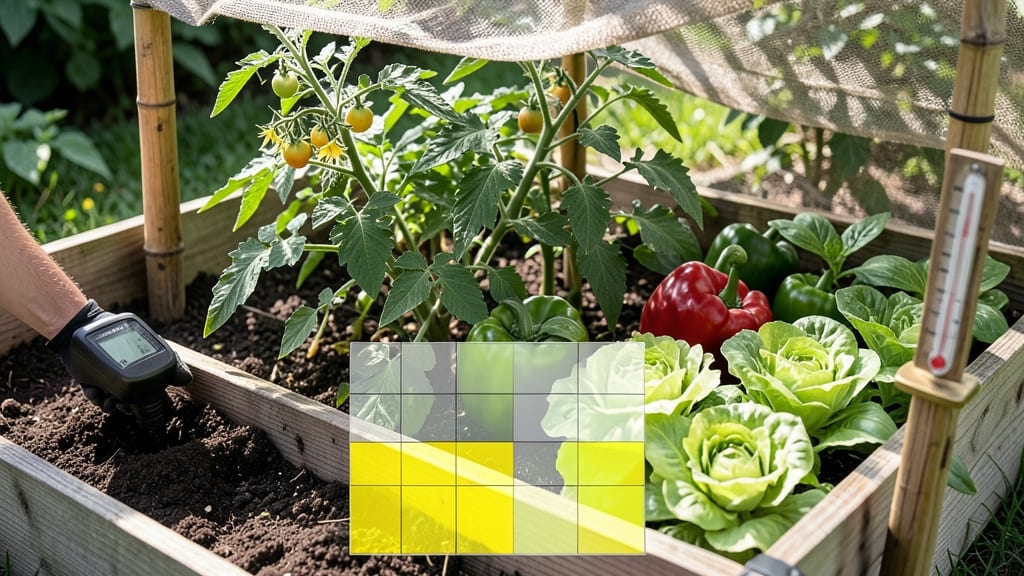
Vegetable gardens need full sun (6+ hours daily) for most vegetables like tomatoes, peppers, and beans, while leafy greens and herbs can thrive with partial shade (4-6 hours). Different crops have unique light needs that directly impact their growth and flavor.
Sunlight is the energy source that drives photosynthesis, and most vegetables need at least 6 hours of direct sunlight daily to produce abundant fruit or strong growth. 🌱 However, not all plants are created equal—leafy greens like spinach and herbs such as basil actually prefer partial shade to prevent bolting (premature flowering) and maintain tender leaves.
Root vegetables like carrots and beets fall somewhere in the middle, needing 4-6 hours of sun to develop properly without turning bitter or woody. Understanding these differences helps you design a more productive garden layout, especially in areas with limited sunlight.
For example, if you're working with a shady spot, consider planting shade-tolerant crops like lettuce, kale, or Swiss chard. These can still produce well with just 4-5 hours of light, while sun-loving plants like cucumbers or eggplants will struggle and may even fail to produce fruit.
The key is matching your plants to their natural light preferences—this simple step can make the difference between a thriving garden and one that leaves you disappointed.
💡 In This Article
- Sunlight Requirements for Different Vegetable Types
- Maximizing Garden Productivity in Low-Light Spaces
Sunlight requirements for different vegetable types
Sunlight triggers photosynthesis, where plants convert light energy into sugars that fuel growth. For sun-loving vegetables like tomatoes, peppers, and eggplants, 6-8 hours of direct sunlight is critical—they need this intensity to develop strong stems, abundant flowers, and fruit production.
Without enough light, these plants become leggy, produce fewer flowers, and yield smaller, less flavorful fruit. For instance, tomatoes exposed to less than 6 hours of sun often develop weak stems that can't support heavy fruit, leading to cracked or rotting tomatoes.
The science behind this involves chlorophyll production. Sun-loving plants have higher chlorophyll content, which absorbs more light energy for photosynthesis. Leafy greens like spinach and Swiss chard, on the other hand, thrive with 4-6 hours of sun because they prioritize leaf growth over fruit production.
Too much direct sunlight can cause them to bolt (go to seed prematurely), turning bitter and tough. Herbs like cilantro and parsley also prefer partial shade, as their delicate leaves can scorch in intense afternoon sun.
Root vegetables like carrots, beets, and radishes fall in the middle, needing 4-6 hours of sun to develop properly. These crops grow underground, where they rely on energy from photosynthesis to expand their roots.
Insufficient light leads to stunted, woody roots, while excessive sun can cause them to become dry and tough. For example, carrots grown in full sun may develop a stronger flavor but can become fibrous, while those in partial shade stay sweeter and crunchier.
Even within categories, there are nuances. For example, bush beans need 6-8 hours of sun to produce pods, while pole beans can tolerate slightly less light because they climb and spread out.
Similarly, basil thrives in 6+ hours of sun but can handle partial shade in hot climates where afternoon sun might scorch its leaves. Understanding these variations lets you strategically place plants to maximize your garden's potential, even in less-than-ideal conditions.
Light quality matters too. Early morning and late afternoon sun provide softer, cooler light that's gentler on plants, while midday sun is more intense.
This is why many gardeners recommend placing shade-tolerant plants on the north or east side of the garden (in the Northern Hemisphere) to protect them from harsh afternoon rays.
The angle of the sun also changes with the seasons, so what counts as "full sun" in summer might not be enough in winter.
Consider this practical example: If you're growing a mix of tomatoes and lettuce, place the tomatoes in the sunniest spot and the lettuce nearby but slightly shaded by a trellis or taller plant. This way, both get the light they need without competing for the same intense exposure.
The result? Juicier tomatoes and tender, flavorful lettuce—proof that a little planning goes a long way in the garden.
Ultimately, the right amount of sunlight isn't just about quantity—it's about matching your plants' natural preferences. By observing how your garden behaves throughout the day, you can fine-tune placements and even extend growing seasons by using reflective surfaces or strategic mulching to enhance light exposure. 🌿