
Pests
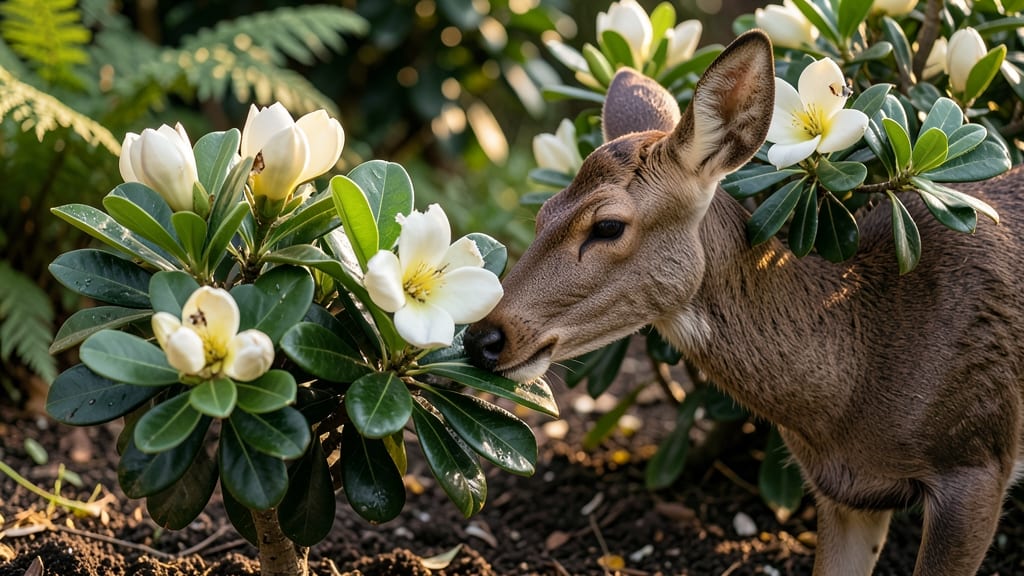
Do deer eat gardenia bushes? Deer rarely eat gardenia bushes because their thick, leathery leaves and strong fragrance make them unappealing. The plant’s bitter taste and dense foliage further deter browsing, though young shoots may still attract deer in desperate feeding conditions.
Gardenias pack multiple deer-deterrent qualities that most plants lack. 🌿 Their waxy, leathery leaves feel unpalatable to deer, while the intense floral scent—especially when crushed—triggers their natural avoidance instincts. Even the plant’s natural compounds create a bitter flavor deer actively avoid, though starving deer might still nibble tender new growth.
This makes gardenias one of the few shrubs that naturally repel deer without chemical interventions.
The real protection comes from combining these natural defenses with smart garden design. For example, planting gardenias near deer-resistant companions like boxwood or oleander creates a protective buffer zone. Even a simple 8-foot fence around vulnerable plants can make the difference in high-deer areas.
The key is understanding that while gardenias are naturally resilient, they’re not completely invincible—especially during droughts when deer seek out any available greenery.
💡 In This Article
- Why Deer Avoid Gardenia Bushes Naturally
- Protecting Gardenia Bushes from Deer Damage
Why deer avoid gardenia bushes naturally
Gardenias possess a unique combination of physical and chemical defenses that make them inherently unappealing to deer. The leaves have a thick, waxy cuticle measuring about 0.05-0.1 millimeters in thickness—significantly denser than typical garden foliage.
This leathery texture creates a tough, unpleasant mouthfeel that deer instinctively avoid, similar to how they reject plants like oleander or boxwood. The waxy coating also makes the leaves slippery, which deer associate with poor nutritional value. 🌿
The scent chemistry plays an equally important role. Gardenias produce volatile organic compounds (VOCs) like linalool and geraniol, which create that signature sweet, heavy fragrance. Deer have an incredibly sensitive olfactory system—studies show they can detect odors at concentrations as low as 1 part per billion.
When gardenia leaves are crushed, these compounds become even more concentrated and pungent, triggering deer's avoidance instincts. This scent profile is so strong that even the plant's fallen blossoms can deter deer from approaching nearby vegetation.
Bitter taste compounds further reinforce this protection. Gardenias contain iridoid glycosides, which create a bitter flavor that deer actively avoid—similar to how they reject plants like foxglove or larkspur. The bitterness isn't toxic but creates an unpleasant experience that deer learn to associate with the plant.
Interestingly, this bitter response is dose-dependent: while mature leaves are safe, young shoots contain higher concentrations of these compounds, making them particularly unappealing. 💛
Comparing gardenias to other deer-resistant plants reveals their unique advantages. While boxwood relies on dense, prickly foliage and oleander uses mild toxins, gardenias combine all three defense mechanisms: physical (thick leaves), olfactory (strong scent), and gustatory (bitter taste).
This multi-layered protection makes them one of the most naturally deer-resistant flowering shrubs available, requiring minimal intervention in most garden settings.
The only exception occurs during extreme conditions. In late winter when deer are malnourished, they may nibble on gardenia shoots—particularly if other food sources are scarce. However, even in these cases, deer typically avoid the mature foliage, demonstrating how effective gardenias' natural defenses truly are.
This selective browsing pattern explains why gardenias thrive in deer-prone areas where other plants suffer significant damage. 🌱