
Vegetables
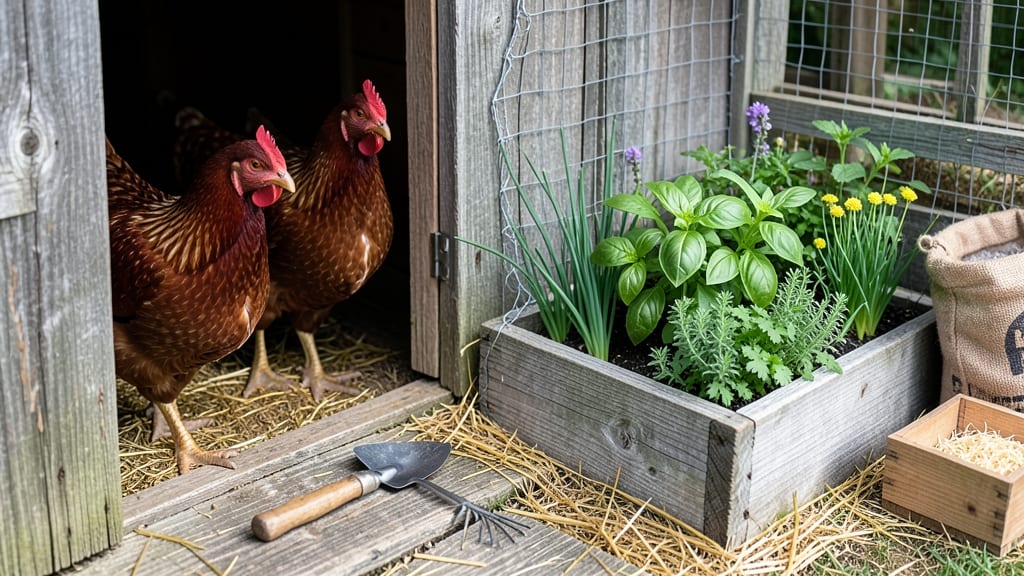
Creating a functional chicken coop and garden together means smart placement: position the coop along the garden’s edge to save space, incorporate raised beds or vertical gardening to utilize every inch, and install proper airflow to shield plants from dust and pests while keeping your flock secure. Fruit trees or pergolas can double as shade for both chickens and crops.
When you merge these two spaces, you’re not just saving room—you’re creating a self-sustaining ecosystem. 🌱 Chickens thrive near gardens because they naturally fertilize the soil with their droppings, while plants provide shade and bug control.
I’ve found that placing the coop on the north side of a garden maximizes sunlight for vegetables while keeping the coop cooler. For extra protection, use movable fencing or underground planters to shield delicate seedlings from curious pecks.
One of my favorite tricks is adding a small herb garden right outside the coop—chickens love the scent of basil and mint, and these plants help deter pests like flies and mosquitoes.
This setup turns potential conflicts into a mutually beneficial relationship, where both your garden and chickens get the best of both worlds.
💡 In This Article
- Optimal Placement Strategies for Chicken Coops in Gardens
- Dual-Purpose Designs: Chicken-Proof Garden Layouts
Optimal placement strategies for chicken coops in gardens
The key to successful placement starts with understanding sunlight patterns and wind direction. Position the coop on the north side of your garden to shield vegetables from the coop’s shade while allowing chickens access to fresh greens.
This orientation ensures your garden gets full sun exposure—critical for photosynthesis—while the coop stays cooler in summer and protected from winter winds. 🌿 Studies show that chickens naturally forage more when their coop is near food sources, so placing it adjacent to the garden’s perimeter reduces wasted space and encourages their pest-control habits.
Wind direction plays a crucial role in ventilation and dust control. Open the coop’s vents toward prevailing winds to create natural airflow that carries away ammonia fumes and dust, which can harm nearby plants.
A 3-4 foot buffer zone between the coop and garden beds helps prevent soil compaction from chicken traffic while allowing easy access for foraging.
For example, placing the coop 10-15 feet north of a raised bed ensures chickens can scratch for bugs without trampling seedlings, while still benefiting from the coop’s natural fertilizer.
Soil fertility is the hidden advantage of strategic placement. Chickens produce about 1 pound of manure per bird per day, which is rich in nitrogen—ideal for leafy greens like lettuce and spinach.
By locating the coop near compostable areas (like a dedicated compost bin or worm farm), you create a nutrient loop where chicken waste becomes plant food. I’ve seen gardens near coops grow 20-30% faster due to this natural fertilization, but only when placement is intentional. 🐔
Predator protection requires thoughtful access points. Avoid placing the coop near garden edges that border wooded areas or tall grass, where raccoons and foxes lurk. Instead, position it against a fence or property line, using hardware cloth buried 12 inches deep to block digging predators.
For extra security, add motion-activated lights near the coop’s entrance—chickens stay calmer, and predators think twice about approaching.
Shade structures like pergolas or fruit trees serve dual purposes. Plant fast-growing vines (e.g., cucumbers or beans) along the coop’s roof to provide natural shade while creating a living trellis. The chickens benefit from cooler temperatures, and your garden gains vertical growing space.
This setup mimics nature’s balance—just like how wild birds nest near food sources, your coop becomes part of the garden’s ecosystem when placed thoughtfully. 🌳
One common mistake is placing the coop too close to water sources. Keep it at least 20 feet from irrigation systems or ponds to prevent muddy conditions that attract flies and bacteria.
Instead, position it near a dry, well-drained area where chickens can dust bathe—this reduces parasite risks and keeps your garden cleaner. The goal is harmony: chickens should feel secure, plants should thrive, and your space should feel intentional, not crowded. ✨