
Container Gardens
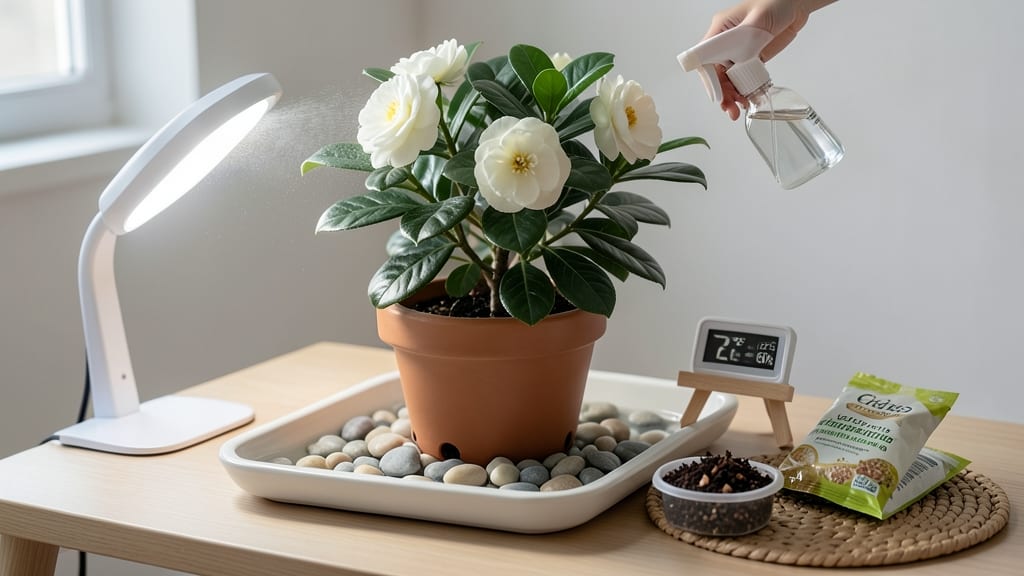
Yes, gardenias can be grown indoors successfully by providing bright, indirect light, maintaining humidity levels above 60%, and keeping temperatures between 65-75°F. Use a well-draining potting mix and prune regularly to promote healthy growth and abundant blooms.
Gardenias love to mimic their natural tropical habitat, so recreating those conditions indoors is key. 🌿 These plants thrive in bright, filtered light—think east or west-facing windows—or under grow lights if natural light is limited.
The humidity trick is often the biggest hurdle indoors, but a simple pebble tray with water or a humidifier can work wonders. I’ve found that consistent moisture (but never soggy soil) and occasional misting helps prevent those dreaded brown leaf tips.
The real magic happens when you combine these factors: proper light, humidity, and airflow to keep your gardenia happy and blooming like it’s basking in its native jungle environment.
One thing that often surprises new gardenia growers is how picky these plants can be about their environment. 💫 For example, sudden temperature drops or drafts can cause bud drop, so keeping them away from doors and windows that open frequently is crucial.
I always recommend starting with a smaller plant—easier to acclimate—and gradually introducing it to its permanent spot to avoid shock. The payoff? Fragrant, glossy blooms that’ll make your home smell like a tropical paradise.
💡 In This Article
- Indoor Gardening Essentials for Growing Gardenias
- Step-by-Step Guide to Indoor Gardenia Care
Indoor gardening essentials for growing gardenias
Gardenias evolved in tropical climates where they receive bright, diffused sunlight through dense canopies, which is why they thrive under east or west-facing windows indoors. These plants prefer light in the 400-700nm spectrum (blue to red wavelengths), which promotes photosynthesis and flowering.
Without enough light, gardenias become leggy and produce fewer blooms. 🌿 For optimal growth, supplement natural light with a full-spectrum LED grow light (12-16 hours/day) if your space gets less than 6 hours of indirect sunlight daily.
The humidity requirement (60%+) is non-negotiable because gardenias originate from regions where air moisture hovers around 70-90%. Indoors, this often drops to 30-50%, causing brown leaf tips—a classic sign of dehydration.
Mimic their native environment with a pebble tray filled with water (place the pot on top) or a cool-mist humidifier near the plant. Grouping plants together also creates a microclimate that retains moisture.
Temperature stability matters too: fluctuations below 60°F or above 80°F stress the plant, leading to bud drop or leaf yellowing.
Airflow is another critical but often overlooked factor. Stagnant air traps humidity around the foliage, creating ideal conditions for powdery mildew or fungal infections. Use a small oscillating fan on low speed (just enough to rustle leaves) to improve circulation without damaging delicate blooms.
I’ve noticed that gardenias in still air develop spider mites more quickly, so even a gentle breeze helps deter pests. The key is balance: enough airflow to prevent disease, but not so much that it dries out the leaves.
Soil composition plays a surprising role in humidity regulation. Gardenias prefer acidic, well-draining mixes (pH 5.5-6.5) with 50% peat moss or coconut coir, 30% perlite, and 20% pine bark fines. This blend mimics their natural forest floor habitat, where water drains quickly but roots stay moist.
Overwatering is a common mistake—check soil moisture by inserting your finger 1-2 inches deep; if it feels dry, water thoroughly until it drains from the bottom. Let excess water escape completely to prevent root rot.
Here’s what happens when you nail these conditions: your gardenia will develop dark green, glossy leaves and produce highly fragrant white blooms that last 5-7 days each. The secret lies in consistency—gardenias are sensitive to sudden changes, so monitor light intensity, humidity levels, and temperature daily.
I’ve seen gardenias in ideal conditions bloom year-round, while those in suboptimal environments struggle to produce even a single flower. 💫 The payoff is worth the effort: a plant that not only survives indoors but thrives like it’s in its tropical homeland.
For troubleshooting, watch for these red flags: yellow leaves often signal overwatering or poor drainage, while dropped buds usually mean temperature stress or low humidity. Adjust your care routine based on these signs, and don’t hesitate to repot into a slightly larger container every 2-3 years to accommodate root growth.
With patience and attention to these essentials, your indoor gardenia can become a fragrant centerpiece that lasts for decades.