
Pests
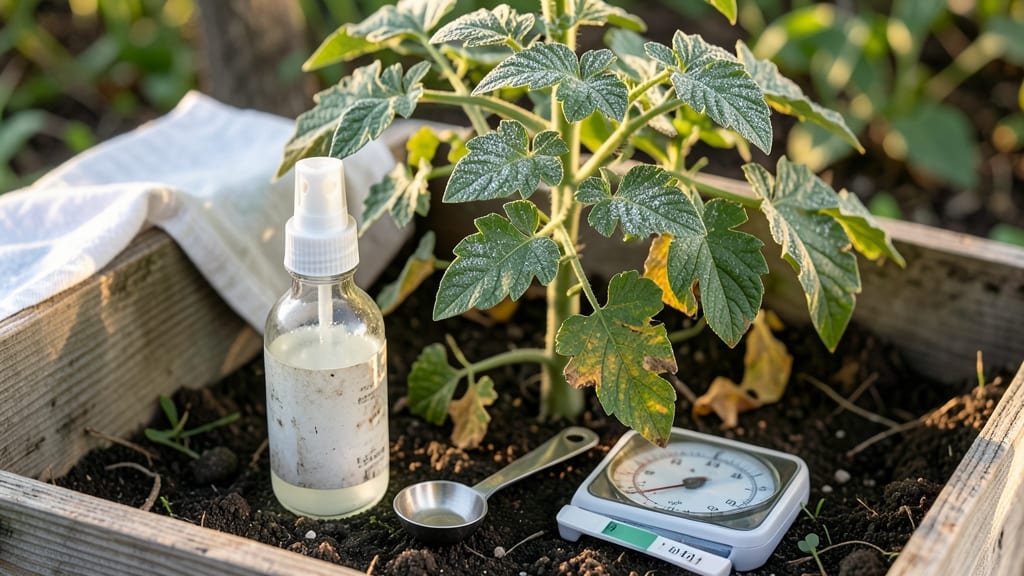
Baking soda in the garden works as a natural slug killer by drying out their slimy trails and clogging their respiratory systems, all while being completely safe for plants when used properly as a spray or barrier treatment.
This common kitchen staple becomes a garden hero because its alkaline properties create an environment slugs simply can't tolerate. 🔥 When sprinkled around plants or mixed into a spray, it disrupts their delicate mucus trails—making movement difficult—and the fine particles irritate their breathing pores.
The best part? It breaks down harmlessly in the soil, leaving no chemical residue behind.
For maximum effectiveness, I recommend applying it in the early evening when slugs are most active, then reapplying after rain.
You can create a simple spray by mixing 1 tablespoon baking soda with 1 quart water and a drop of dish soap as a surfactant, or make a dry barrier by sprinkling it around vulnerable plants like a ring of protection.
💡 In This Article
- How Baking Soda Works Against Garden Slugs
- Best Baking Soda Slug Control Methods for Gardens
How baking soda works against garden slugs
Baking soda's slug-killing power comes from its chemical composition as sodium bicarbonate (NaHCO₃), which creates an alkaline environment that disrupts slug physiology. Slugs thrive in moist, slightly acidic conditions (pH 5.5-6.5), but baking soda raises the pH to 8.0 or higher when dissolved in water or applied dry.
This abrupt shift dehydrates their mucus trails—those silvery pathways you see at night—which are essential for their movement and respiration. Without this protective slime, their delicate skin dries out rapidly, leading to death within 24-48 hours.
The fine, crystalline particles also physically clog their breathing pores (pneumostomes), preventing gas exchange. Think of it like breathing through a damp cloth that suddenly becomes coarse and irritating. 🌱 For maximum impact, the particles need to make direct contact with their bodies or trails.
That's why creating a fine powder application or mist is crucial—larger granules won't provide the same surface area for contact. Interestingly, this method targets slugs specifically while leaving earthworms and beneficial soil microbes unharmed, as they're better adapted to alkaline conditions.
What makes baking soda uniquely effective is its dual-action mechanism: chemical disruption of their biology AND physical irritation. When applied as a barrier, the alkaline environment creates a "no-go zone" around plants.
Slugs avoid crossing these treated areas because their sensory receptors detect the chemical change, making it a proactive deterrent. The key is consistency—reapplying after rain or watering ensures the alkaline effect persists.
Unlike chemical pesticides that linger in the soil, baking soda breaks down into harmless sodium, carbon dioxide, and water within 2-3 days, leaving no toxic residue.
For visual learners, imagine this: slugs move through their garden like tiny, slimy tanks, leaving behind a chemical highway. Baking soda acts like a chemical roadblock that both disrupts their transportation system and creates a toxic zone.
The beauty is that it's not just about killing—it's about making their environment actively hostile to their survival. This is why organic gardeners often pair it with physical barriers like copper tape, creating a multi-layered defense system that slugs can't penetrate.
One fascinating detail is how baking soda affects different slug species. For example, it's particularly effective against gray garden slugs (Deroceras reticulatum), which are common pests, but less so against some tropical species that have evolved in more alkaline environments.
This selectivity makes it a targeted solution rather than a broad-spectrum pesticide. The alkaline environment also prevents fungal growth on the treated areas, adding another layer of protection for your plants.
To understand the scale, consider that a single teaspoon of baking soda contains about 5 million particles. When properly dispersed, each particle becomes a microscopic obstacle in the slug's path.
This particle density is what gives baking soda its reputation as a "slug sandpaper"—abrasive enough to cause physical damage while being gentle enough for plant roots. The science here shows how a simple kitchen ingredient can leverage basic chemistry to solve a common gardening problem.
What most gardeners don't realize is that baking soda's effectiveness increases when combined with other organic methods. For instance, pairing it with diatomaceous earth creates a double-edged attack—while baking soda disrupts their biology, the sharp diatomaceous earth particles cause physical damage.
This combination works particularly well in moist conditions where slug activity peaks, creating a synergistic effect that neither ingredient could achieve alone. 🌿