
Pests
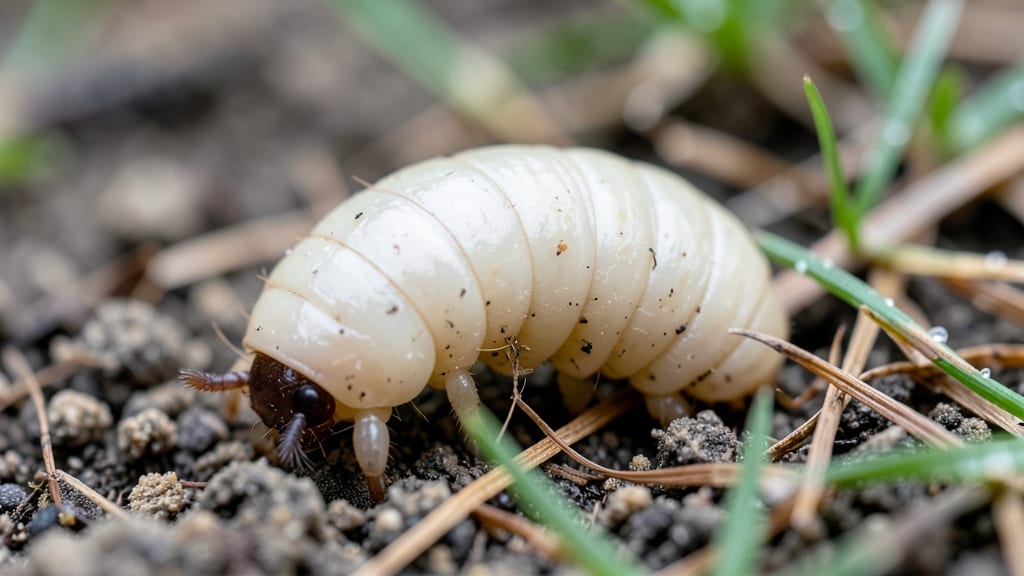
Grubs are bad for your garden because they feed on grass roots and plant stems, weakening or killing plants by disrupting nutrient absorption and structural integrity. Their damage often appears as brown patches or wilting, especially in lawns and root crops.
Grubs are the larval stage of beetles like Japanese beetles and June bugs, and they're particularly destructive because they target the very parts of plants that keep them alive. 🌱 When they chew through roots and stems, plants can't absorb water or nutrients properly, leading to stunted growth or death.
The damage is especially noticeable in lawns, where brown patches form as grass dies from the lack of roots to support it.
These pests thrive in moist soil, which is why they're often found in well-watered lawns and garden beds. Their feeding activity weakens plants over time, making them more susceptible to disease and environmental stress.
Without intervention, a grub infestation can turn a healthy garden into a struggling one, requiring careful monitoring and treatment to restore plant vitality.
💡 In This Article
- How Grubs Destroy Garden Plants and Lawns
- Natural and Chemical Grub Control Methods for Gardens
How grubs destroy garden plants and lawns
Grubs primarily target plant roots and stems by using their powerful mandibles to chew through these essential structures. Their feeding creates jagged cuts that sever vascular tissues, which are responsible for transporting water and nutrients from the soil to the plant's leaves.
This disruption causes plants to wilt or develop brown, patchy areas as they struggle to sustain themselves. In lawns, this often manifests as irregular dead spots that feel spongy when lifted, revealing the grubs beneath.
The damage escalates because grubs don't just nibble—they consume entire root systems over time. A single grub can devour up to 100 feet of roots during its 10-14 month larval stage, depending on species.
For example, Japanese beetle grubs are particularly aggressive, targeting both grass roots and shallow-rooted vegetables like lettuce and carrots. Their feeding weakens plants to the point where they can't recover, even after the grubs move on to pupate in late summer.
Seasonal cycles amplify the problem. Grubs hatch from eggs laid by adult beetles in late spring or early summer, then burrow into the soil to feed. By late fall, they've grown large enough to overwinter, emerging again in spring to repeat the cycle.
This multi-year life span means damage accumulates over seasons, turning a garden into a high-maintenance battleground if left unchecked. The worst infestations occur in moist, well-aerated soils where grubs thrive, making lawns and garden beds prime targets.
What makes grubs especially dangerous is their indirect impact on soil health. As they feed, they create tunnels that disrupt root growth and aeration. This compacts the soil, reducing water penetration and nutrient availability. Over time, the soil structure degrades, making it harder for plants to establish new roots.
Unlike adult beetles that feed on leaves, grubs attack the plant's foundation, often without visible above-ground symptoms until the damage is severe.
Consider this comparison: A healthy lawn has roots extending 3-6 inches deep, while grub-damaged areas may have roots reduced to just 1 inch or less. This shallow root system leaves plants vulnerable to drought and heat stress.
The result? Even with proper watering, plants can't absorb enough moisture, leading to chronic wilting and stunted growth. In extreme cases, entire sections of lawn may die back completely, requiring reseeding.
Identifying grub damage early is key. Look for these telltale signs: spongy turf that lifts easily, increased bird activity (birds dig up grubs for food), and thinning grass despite regular mowing.
The sooner you spot these indicators, the better your chances of saving your plants before the infestation spirals out of control. 🌱