
Tools
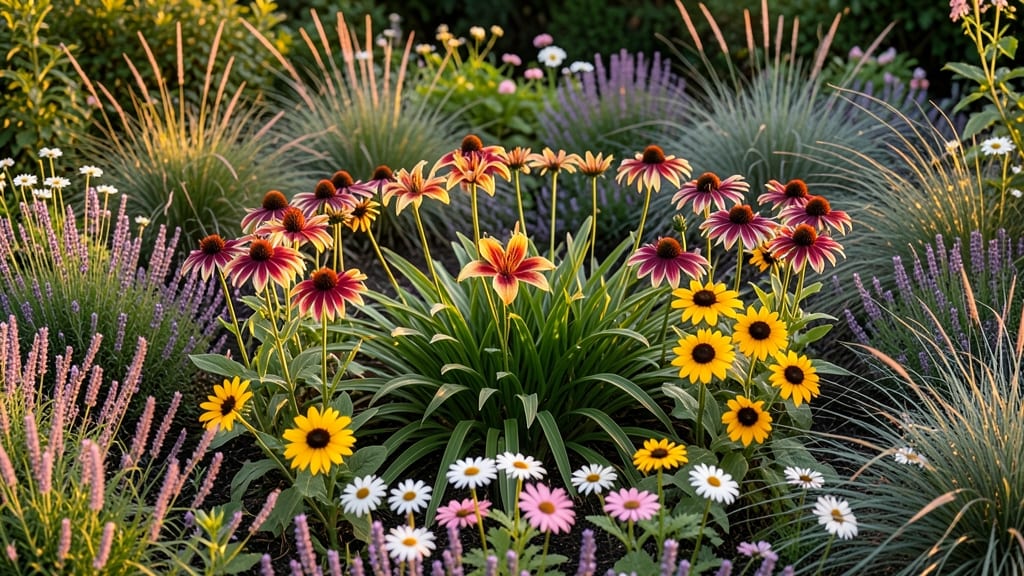
A flower garden in the shape of a circle requires calculating its area using the formula πr² (pi times radius squared), where the radius equals half the garden’s diameter. Measure the diameter first, divide by 2 to find the radius, then apply the formula for accurate planting plans and material estimates.
A circular flower garden's unique shape makes precise area calculations essential for planning. 🌸 The radius measurement determines everything from mulch quantities to plant spacing—even a small error can lead to gaps or overcrowding.
For instance, a 10-foot diameter garden has a 5-foot radius, giving you an area of about 78.5 square feet (π × 5²). This formula works for any circular design, whether you're creating a formal bed or a casual wildflower circle.
Once you've calculated the area, use it to determine how many plants you'll need. Most perennials require 12-18 inches of spacing, while annuals can be planted closer together.
The curved edges of a circular garden actually make planting easier than you might think—just start at the center and work outward in concentric circles. This method ensures even distribution while minimizing wasted space.
💡 In This Article
- Calculating Circular Flower Garden Dimensions
- Practical Tips for Planting in a Circular Garden
Calculating circular flower garden dimensions
The beauty of a circular flower garden lies in its symmetry, but that symmetry requires precise calculations to execute properly. The formula πr² (pi times radius squared) works because a circle's area depends on its radius—not its diameter—squared.
This means if your garden has a 12-foot diameter, the radius is 6 feet, and the area becomes π × 6² = 113.1 square feet.
The key is understanding that doubling the radius (from 6 to 12 feet) quadruples the area (from 113.1 to 452.4 square feet), which is why small measurement errors can lead to big planting mistakes.
When measuring, use a tape measure for accuracy—especially along the diameter—and mark the center with a stake. For curved edges, a flexible garden hose or string works perfectly to trace the shape before digging.
If you're working with metric units, convert feet to meters first (1 foot = 0.3048 meters), then apply the formula. For example, a 3-meter diameter garden has a 1.5-meter radius, giving you π × 1.5² = 7.07 square meters.
This conversion is critical if you're sourcing materials like mulch or soil bags labeled in metric units.
Adjusting for curved planting beds adds another layer of precision. Most gardeners use a stake-and-string method: hammer a stake at the center, tie a string to it, and stretch the string to the desired radius while marking the ground with a garden hose or spray paint.
This creates a perfect circle for digging or laying landscape fabric. For larger gardens, consider using a laser level or garden circle template to maintain consistency, especially if the garden has multiple concentric rings or terraced levels.
What most people overlook is how the formula changes when dealing with partial circles or semicircles. A half-circle garden (like a crescent shape) uses ½πr², while a quarter-circle (common in corner gardens) uses ¼πr².
For instance, a 10-foot diameter half-circle garden has a radius of 5 feet, giving you ½ × π × 5² = 39.25 square feet—half the area of a full circle. This adjustment is essential for avoiding over- or under-planting in asymmetrical designs.
For practical applications, always round up your area calculations by 5-10% to account for soil compaction, plant spacing adjustments, or future expansion. For example, if your garden calculates to 80 square feet, plan for 85-90 square feet of materials.
This buffer ensures you have enough mulch, plants, or edging stones without running short mid-project. The extra material also comes in handy if you decide to add a border or walking path later.
Pro tip: Use a digital calculator or smartphone app to compute πr² quickly, especially if you're designing multiple circular beds. Many apps also allow you to input diameter directly, saving you the step of dividing by 2.
For freehand sketches, a protractor helps visualize angles and ensure your garden’s curves are smooth and intentional. 🌿